

Zane caught his first fish at three years old — a blacktail with his grandfather — and he still has it, frozen in a little Tupperware container, 28 years later. Fishing was always in his life. Fly fishing almost wasn't.
A friend introduced him to it about four years ago, and he was reluctant. With his disabilities he wasn't sure how he'd manage it, and he was worried about damaging the gear his friend had lent him. Then he made his first cast, and the challenge itself became the hook — figuring out how to do this thing his own way turned out to be as exciting as the fishing.
It took months before his first trout on fly, and when it came, he says his whole world opened up. Tying followed because fly shops weren't always within reach, and he wanted to understand the flies — what they imitate, when to use them. Then he quit tying altogether. Then, when getting out to fish got harder — there are only so many places genuinely accessible to disabled anglers — he came back to the bench and made the switch that changed everything: he stopped trying to imitate other tiers and started figuring out what worked for him.
What "for him" means at the vise: tying a knot with 6X tippet or working a size 18 fly with two fingers and limited dexterity in his left hand, a right arm stump with a thumb, and bilateral above-knee amputations. He documents all of it in public — the progress, the mash-up patterns with names like Franken Nymph and BumbleDeceiver, and the struggle too. His Crashout Mayfly video deliberately leaves in the moments where he was genuinely frustrated at the vise, because that IS the picture. We sent him three questions. Here's Zane, in his own words.
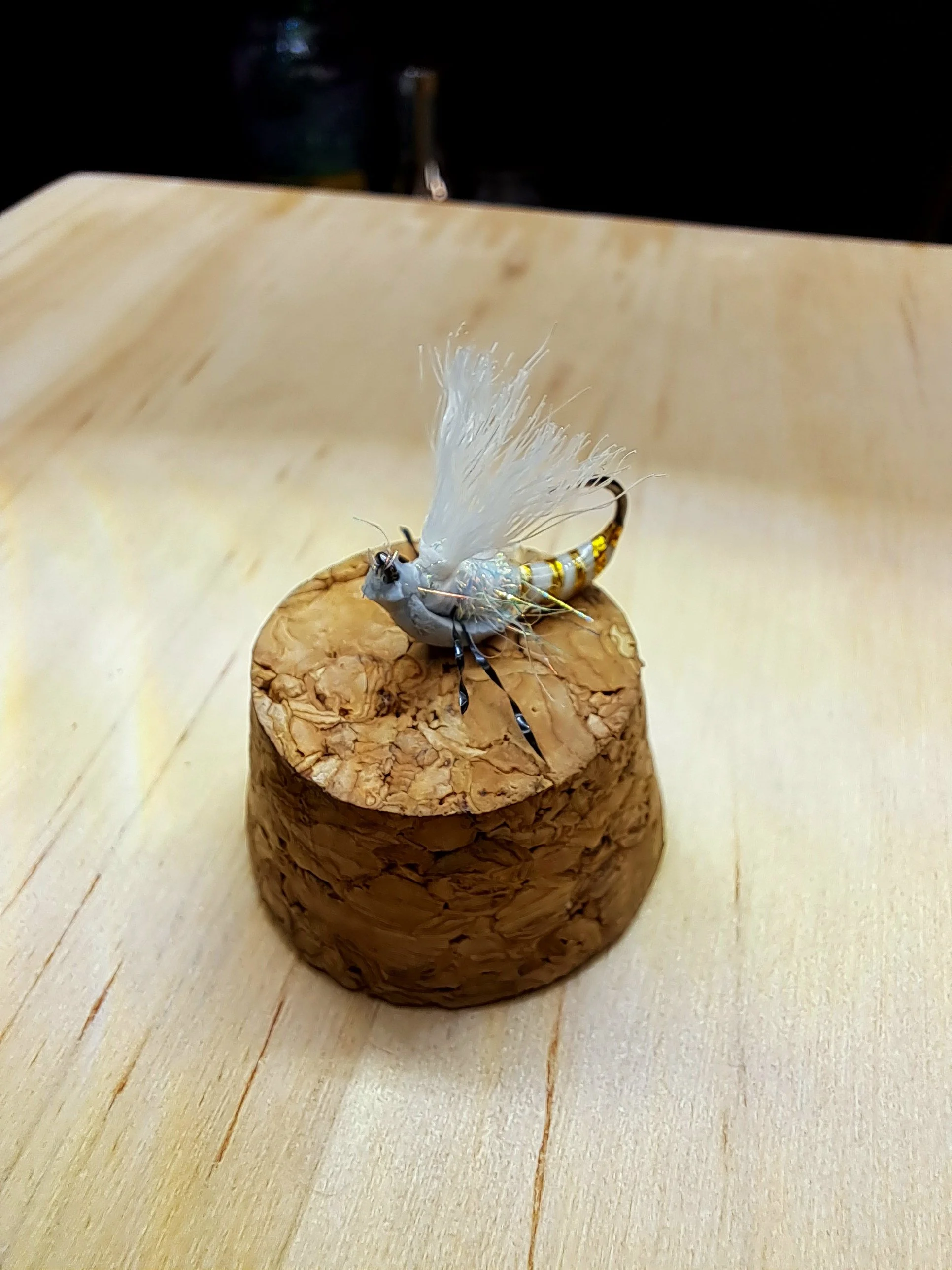
The Crashout Mayfly on its cork — the fly from the video where Zane left his frustration at the vise in the edit on purpose.
You're a disabled fly angler in South Africa building this in public — how'd you get into fly fishing and tying in the first place, and what kept you at the bench when you were just starting out?
I've always loved fishing. I caught my very first blacktail (Diplodus capensis) when I was three years old with my grandfather (I actually still have that fish frozen in a little Tupperware container today, 28 years later!).
I only got introduced to fly fishing about four years ago through a friend of mine and I'll be honest, I was extremely reluctant to give it a go initially. With my disabilities, I wasn't sure how I was going to manage it, and I was especially worried about damaging some of his gear that he'd lent me.
But after my first cast, I realised that maybe I could actually do this. It was going to take a lot of practice and figuring things out, but somehow that challenge became just as exciting, if not more exciting, than the actual fishing.
I spent countless hours researching, watching videos and reading books, trying to absorb as much information as I possibly could. It took a few months before I finally caught my first trout on fly, and it's difficult to explain, but it felt as though my whole world had just opened up.
Fly tying followed shortly after. I didn't always have access to fly shops, and one of my favourite things to do whenever I did get to a fly shop was browse through all the flies. I figured learning to tie would not only give me more options but also help me understand the flies, what they imitate and when to use them.
Initially, I was incredibly enthusiastic about it, but I soon realised I was essentially just tying a random bunch of materials onto a hook. My flies were untidy, I didn't really understand what I was doing, and eventually it became quite demoralising. I stopped tying altogether and spent most of my time fishing instead.
I only really picked fly tying up again when getting out to fish became increasingly difficult. There are only so many places that are genuinely accessible for disabled anglers, and I found myself having to look for another way to enjoy the sport.
The funny thing is, I still wasn't particularly good at tying. But I eventually realised that I was spending too much time trying to imitate other fly tiers, their techniques and the way they did things, rather than figuring out what I could do and what worked for me.
Once I made that switch, everything changed. I started enjoying it more and more.
I've always loved being creative, and doing things with my hands brings me a lot of joy. Fly tying makes it even more special because you're not just combining beautiful materials to create something functional; there's so much room to experiment and go completely wild with it.
My disabilities have definitely influenced my journey, and there are still plenty of things I have to figure out. Even something as basic as tying a knot with 6X tippet or working with a size 18 fly can become quite an exercise when you're doing it with two fingers and limited dexterity on my left hand, a right arm stump with a thumb, and bilateral above-knee amputations.
But I think that's also a big part of what keeps me going. I genuinely enjoy figuring things out, finding different ways of doing them and pushing myself to see what's possible. In a strange way, sometimes the challenge is what makes it all so rewarding.
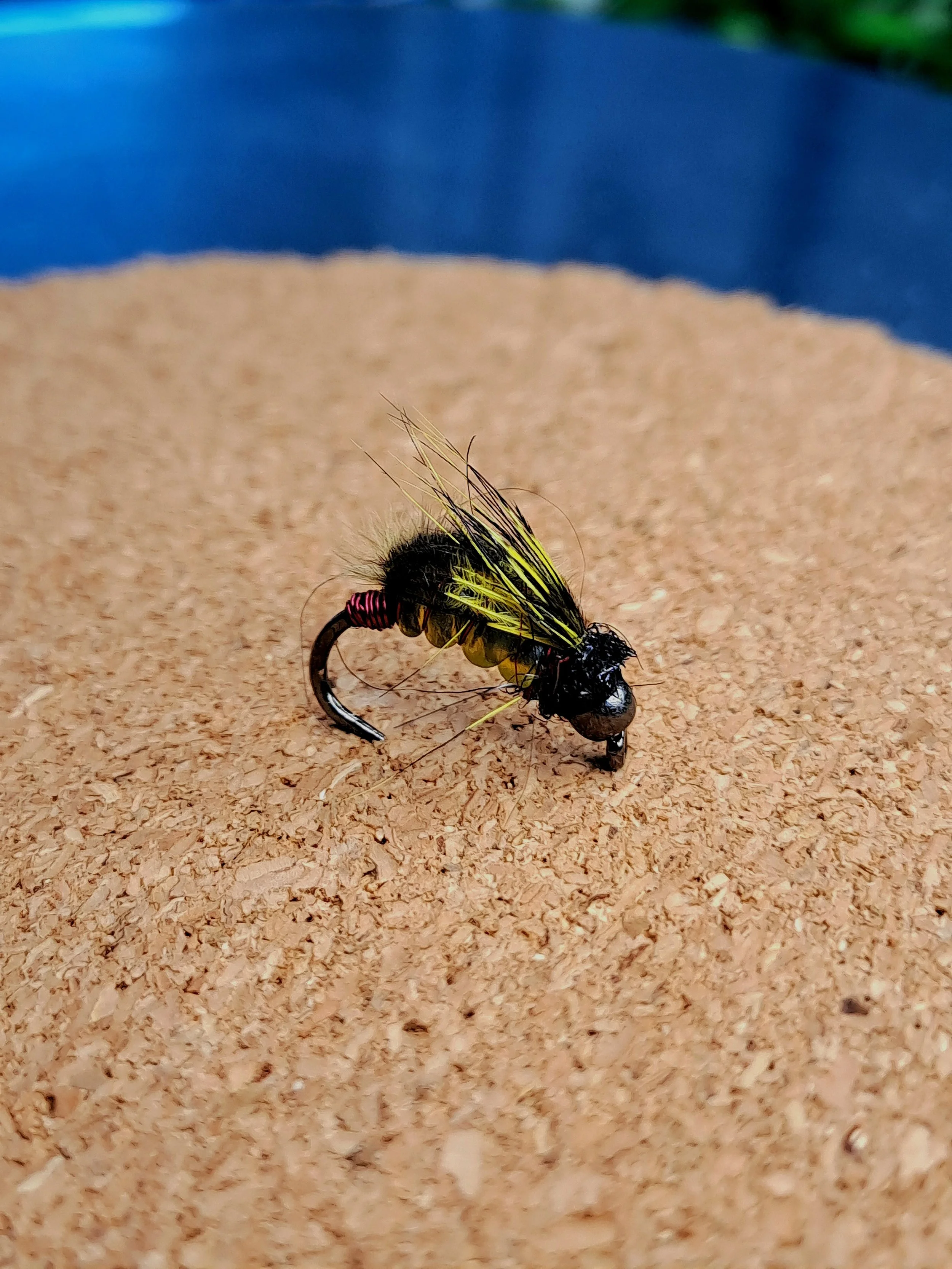
The BumbleDeceiver — one of Zane’s mash-up patterns.
Your tying progress videos and mash-ups like the Franken Nymph and the BumbleDeceiver are wild — when you sit down to experiment, are you tying with a specific fish or water in mind, or just seeing what happens and then getting it wet to test it?
I never really sit down with a specific fish in mind. I have this slightly strange belief that you can deceive a fish with just about anything. There's a famous saying that you catch more anglers with a pretty fly than you do fish!
That being said, I've come to appreciate that a fly still has a purpose, and understanding how and when to use it is just as important as tying it. Making it look pretty is just an added bonus.
My process usually starts with something fairly traditional in mind. It might be a pattern I've seen another fly tier tie, something I've been inspired by, or simply a general idea of something I want to experiment with.
Then I get sidetracked!
I can honestly get into something of a trance when I'm at the vice. I'll start with one idea and somehow end up somewhere completely different. Sometimes I'll take an existing pattern and start substituting materials just to see how they change the fly's appearance or action in the water.
Other times, I'll be watching a fly-tying video and notice one little step or technique that catches my attention. I'll immediately start thinking about how I could incorporate it into another pattern, and it'll scratch at my brain until I eventually get to the vice and try it out.
I have an entire tin of failed, ugly and sometimes downright questionable flies that have come out of these experiments. But that's part of the process, and I actually enjoy it. Not everything is going to work, and sometimes you learn just as much from the flies that don't work as the ones that do.
I think some of my videos also show another side of fly tying that people don't always get to see. Take the Abomination Wasp and the Crashout Mayfly, for example.
The Crashout Mayfly video was particularly intentional in that regard. I decided to leave in the moments where I was genuinely struggling and getting frustrated at the vice. Sometimes even the most basic things can be incredibly challenging for me, and I don't see much point in pretending otherwise.
I could easily cut all those moments out and only show the finished fly, but that wouldn't really show the full picture of my journey. There are days when things come together beautifully, and there are days when something as simple as handling materials or getting a particular step right can turn into a battle.
But I keep going, and eventually something comes together. I think that's worth showing just as much as the finished patterns.
I think that's what I enjoy most about fly tying. There's always something new to learn or something different to try. I'm not particularly interested in limiting myself to what a pattern is supposed to look like or how a particular material is supposed to be used.
Sometimes you start out tying one fly and end up with something completely different. That's where some of my favourite patterns have come from.
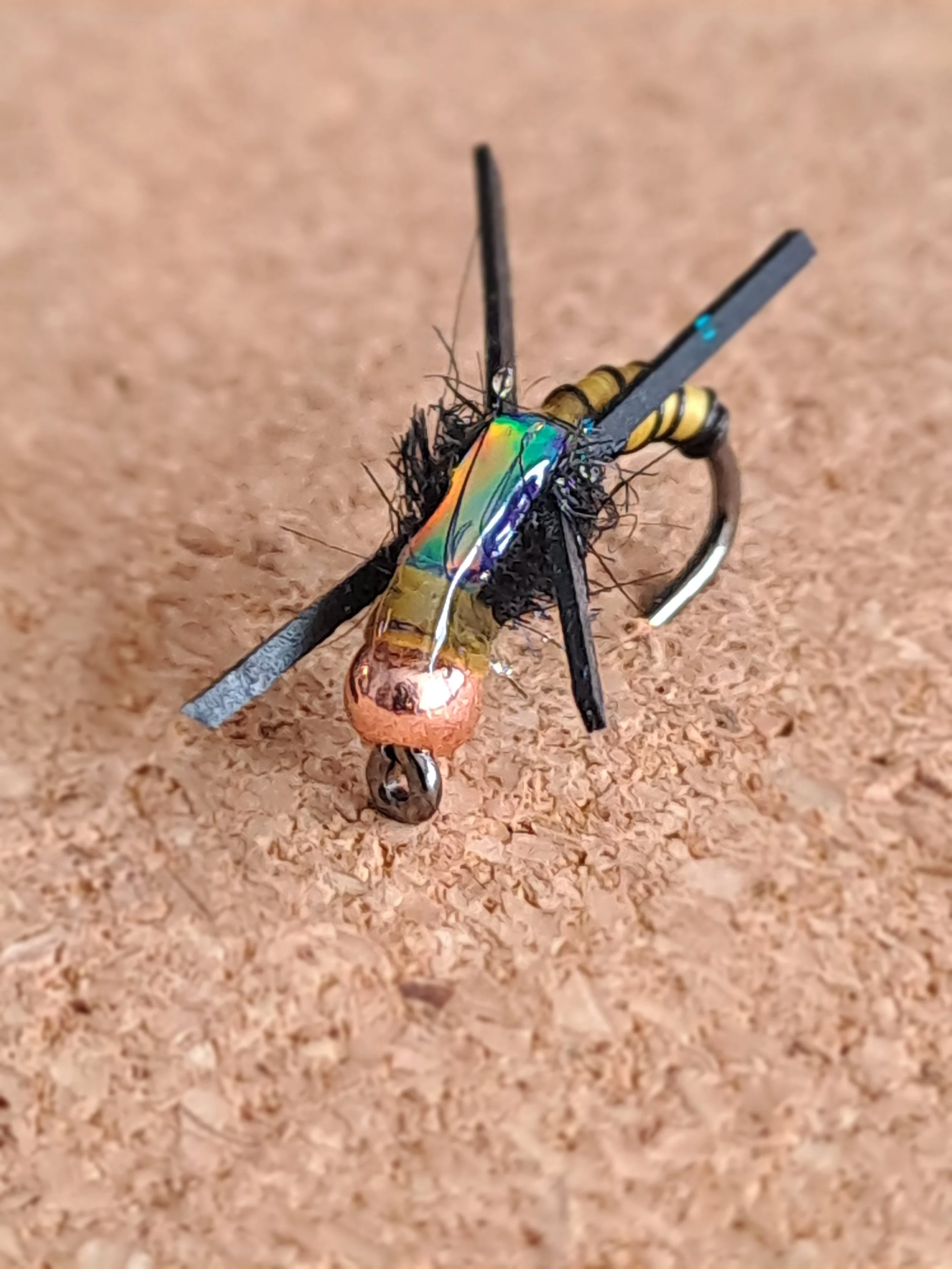
The Franken Nymph up close — a mash-up in the truest sense.
Stonefly Bespoke is more than flies now — merch, and the Snack & Tackle Events Trailer. What are you building toward with all of it, and what do you want people to take away from following along?
For me, the main goal with Stonefly Bespoke is to inspire more people, with and without disabilities, to get outdoors, experience nature and enjoy what it has to offer.
Fly fishing has taught me an awful lot about conservation and why it's so important. There's almost a strange contradiction in fishing sometimes. You discover these beautiful places and naturally there's a tendency to want to keep them secret and exclusive, partly because you want to protect them. But I've often wondered, what if more people actually got out there, experienced these places for themselves and fell in love with them? Wouldn't that give us even more people who want to protect them?
I think we need more exposure to nature, and fly fishing is a wonderful way of doing that. It slows you down. You start paying attention to the tiniest insects, what's happening beneath the surface, the movement of the water and the fish themselves. You become much more aware of your surroundings, and you start appreciating things you might otherwise have walked straight past.
Being disabled, I've also experienced just how limiting access to certain places can be. There are plenty of fishing destinations that simply aren't accessible to everyone, and that can make participating in the sport difficult. That's something I'd really like to see change.
Fly tying also opens up another dimension for disabled anglers. Sometimes conventional fly-tying tools just don't work for you, or your physical limitations mean you have to approach a technique differently. Even the way you manipulate materials or the action you create in a fly might be different. There's no reason that should stop you from creating something effective. Sometimes you just need to find another way of doing it.
I also think having a community around you makes a massive difference. Being able to share ideas, learn from one another, experiment and support each other is incredibly valuable. There's also a mental health aspect to having something creative and constructive to focus on, especially when getting out and doing the things you love becomes more difficult.
As for the different parts of Stonefly, the flies, merchandise and Snack & Tackle Events Trailer, they're all ways of contributing towards that bigger picture. I want to make fly fishing more accessible, introduce more people to the sport and bring some convenience to the places where people go to enjoy it.
Ultimately, I'd love to see fly fishing in South Africa grow, not just in numbers but in the diversity of people getting involved and the places and species we're exploring.
I don't want fly fishing to become something that's exclusive to a particular group of people. There's so much out there to discover, and I think the more people we can get outside, enjoying and appreciating nature, the better.
If Stonefly can play even a small part in making that happen, then I think we're heading in the right direction.
The Fly Life take: Every tier has a tin of failures. Zane's might be the most honest one in fly tying — failed, ugly, downright questionable flies he keeps because the ones that don't work teach as much as the ones that do. That's the whole Stonefly method in one tin: start traditional, get sidetracked, substitute, mash up, test, keep what survives.
The bigger lesson is the switch he made at the bench. He quit tying when he was measuring himself against other tiers' hands. He came back when he started asking what HIS hands could do — two fingers, a thumb on a right arm stump, and a way of manipulating materials that's entirely his own. The flies got better because they stopped being imitations of someone else's tying, in every sense.
And he's building outward from the vise on purpose: the merch and the Snack & Tackle Events Trailer all feed one goal — more people, disabled and not, outside and on the water in South Africa, in more places, chasing more species. More people falling in love with these places means more people protecting them. Hard to argue with that math.
Find Zane on Instagram at @stonefly_bespoke and follow Stonefly Bespoke as it grows.
