

Angler Spotlight: Fly Tying, Fjords, and Sea Trout
With: danish_fly_tying
Spend enough time around serious saltwater fly anglers and certain names start to carry weight — not because they chase attention, but because their work holds up where it matters. Jens Skaerbak, known through his Instagram handle @danish_fly_tying, is one of those names. His patterns are shaped by the demanding conditions of the Danish coastline, where sea-run brown trout expose any weakness in design, presentation, or approach.
This isn’t fly tying built for aesthetics alone — it’s built for fish that cruise shallow fjords, often in less than a foot of water, and refuse anything that doesn’t behave naturally. Skaerbak’s flies reflect that reality. Sparse profiles, subtle flash, and carefully selected materials designed to move — not just sit — in the water column.
There’s a distinctly Scandinavian philosophy behind his work. Transparency matters. Movement matters more. His patterns are stripped down to the essentials, allowing feathers, fur, and synthetics to breathe with each pause in the retrieve. It’s a style that prioritizes realism through motion rather than imitation through bulk — a critical distinction when targeting pressured coastal trout.
What stands out is his willingness to challenge assumptions. While many anglers lock into rigid fly selection habits, Skaerbak embraces experimentation — from ultra-natural shrimp patterns to bold, flash-heavy baitfish that still produce. That balance between discipline and curiosity is what keeps his approach evolving.
This is the kind of angler you hear about through other anglers — the ones who’ve spent enough time on the water to recognize what actually works. And when it comes to modern coastal fly fishing, Jens Skaerbak is someone worth paying attention to.
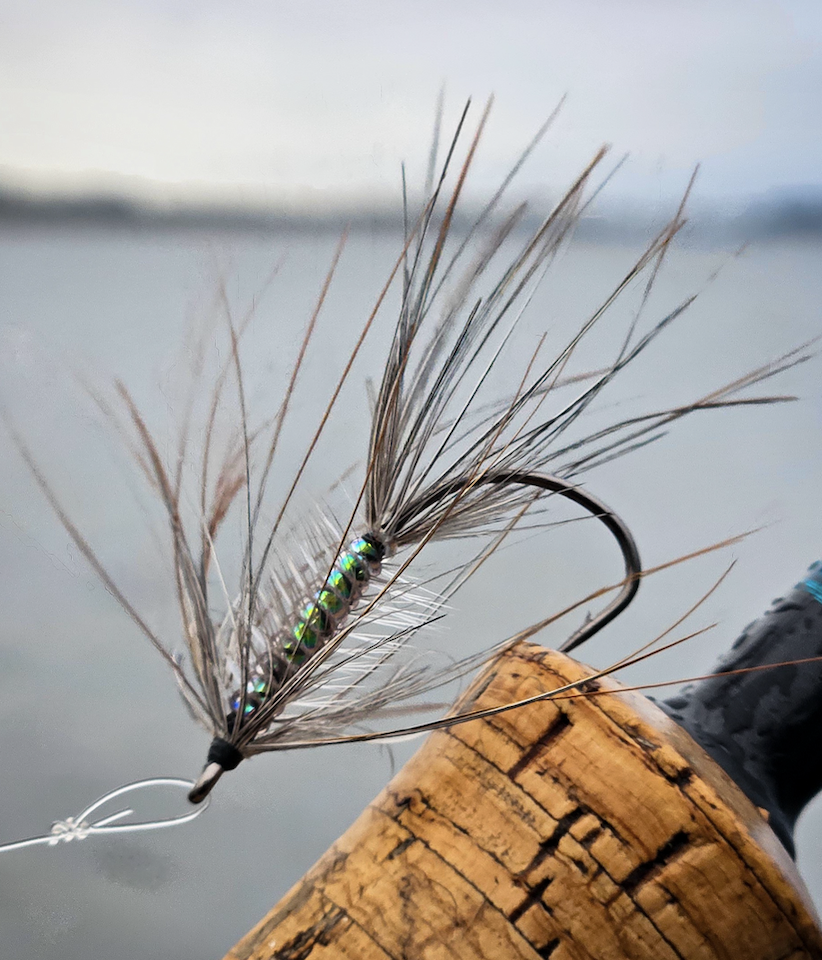
Your sea-run brown trout patterns carry a distinct Scandinavian coastal influence — sparse profiles, natural movement, and subtle flash. When you sit down at the vise to design a fly for pressured fjord fish, what are the non-negotiables in profile and materials?
Sea trout are opportunistic when it comes to prey. They eat scuds, shrimps, ragworms and fish in various sizes. Still, there are days when they are tuned in to something specific, and with this in mind I recommend having different fly patterns in your fly box — especially when it comes to different sizes and movement patterns. I think this is more important than having the exact nuance of tan in your shrimp fly. Fluorescent colors are, in my opinion, worth trying if you have the opportunity. Some will say it doesn’t matter, but as in many other aspects of fly fishing, believing in what you have at the end of your fly line is crucial for fishing effectively Movement of the fly and materials is essential for me when I tie my flies. The key factor is “less is more” to get the right transparency. I strongly recommend tying your flies sparse. This allows materials such as feathers and craft fur to vibrate and move much more naturally. When you tie your flies, use only half the amount of material you think you need — and often try with even less. For many of my palmer hackles, I strip one side of the feather to achieve a sparser look. For fishing in fjords, it is not necessary to cast very far because sea trout are often cruising close to shore in shallow water. Most of the time, you don’t need to wade deeper than your knees. Therefore, I almost only use unweighted flies in the fjord. Sometimes you will find fish in 20 cm of water, so you need to be able to cast a fly that doesn’t sink too fast and allows you to make long pauses when stripping. This technique is incredibly important if you want to catch more fjord fish. When I use flash, I typically include just a couple of strands, mostly thin opal flashabou. Last summer I experimented with a baitfish pattern made entirely of the shiniest holographic flash I could find — just to prove to myself that very flashy flies also work. That fly caught me the most beautiful, fat trout I got that summer. There are no rules in fly tying! Just experiment and try things out. Make sure you don’t miss the opportunity to try topwater fishing with foam beetles. Especially in summer, when many insects are blown out onto the water, this is both a fun and effective way of fishing. My fly sizes range from size 10 gammarus flies to baitfish patterns around 10 cm. Most of my flies are tied on stinger hooks from size 10 to 2. The Ahrex NS122 Stinger hook is the one I use the most.
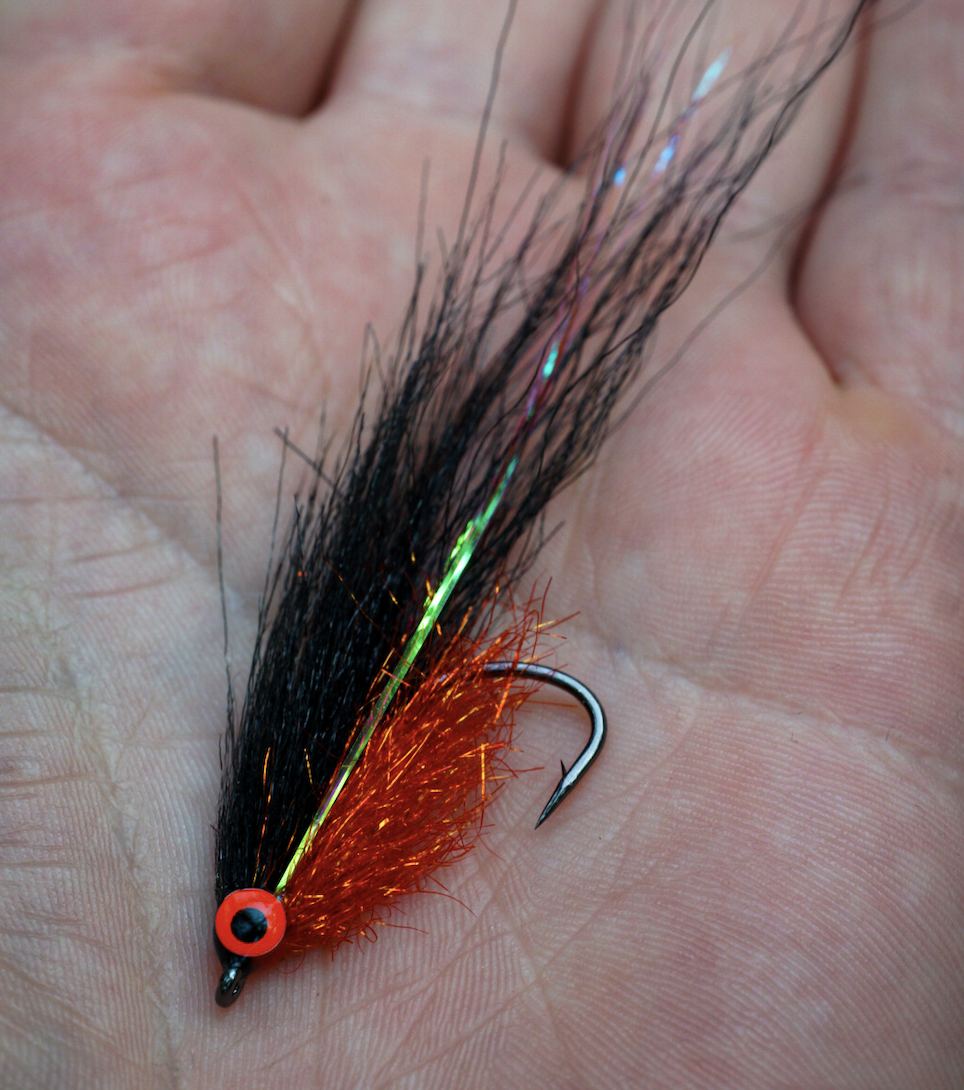
Sea-run browns can shift from aggressive hunters to ultra-selective feeders depending on light and tide. How do you adjust your fly design between low-light baitfish situations and clear, high-sun conditions when the fish get cautious?
When you fish for searun brown trout in Denmark, no trip is the same. Every trip have different conditions such as season, weather, wind, waves, water temperature, salinity, water level and other factors. Some anglers even plan their trips according to moon phases. All these factors make the fishing both incredibly fun and incredibly frustrating. You can easily have 5–10 trips without catching anything. On the other hand, that’s what makes every fish worth celebrating — even the small ones. Every angler, including myself, has their own experience when it comes to selecting flies for specific conditions. We all have our favorite flies, and for some anglers it becomes almost like a religion. Some only use one pattern, while others bring hundreds of flies in multiple boxes. In recent years I have challenged myself to carry only a small box — but it still contains both small and larger flies. On calm days, I love using lighter gear such as my 3weight rod. It gives you more feel with both the fly and the fish you catch. I love it! On these days the trout are often very picky and easily spooked. The flies I prefer in such conditions are small and natural-colored. Presentation is crucial to avoid spooking the fish, and lighter gear helps with that. Fishing is often much better if you have some wind toward or along the shoreline. With movement in the water and waves, trout become much more aggressive toward your fly. If possible, choose these conditions over a beautiful calm day. Rough weather is what you want! I prefer bigger and more colorful flies in these conditions — perhaps a larger baitfish or shrimp with spey hackles. A pattern that is visible and creates turbulence in the water. Fishing into the night has given me fantastic memories. Just wading along the shoreline, hearing trout splash in the dark. You get a whole new sense of your gear and casting technique when you rely only on sound and feel. At night I use larger, darker flies that goes high in the water. Some are tied with foam so they break the surface as you strip them. Long, slow retrieves can be the key to success.
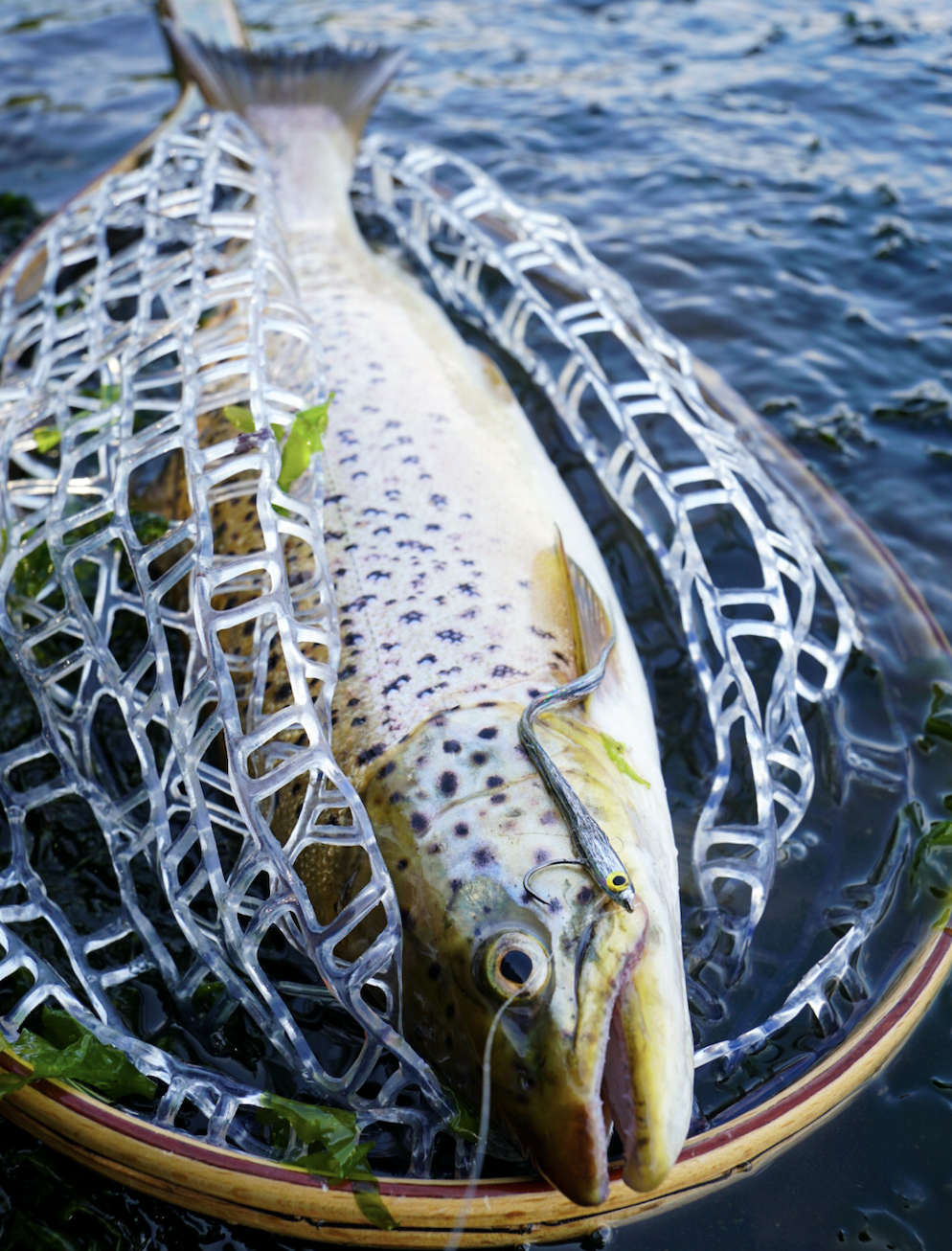
Many of your coastal patterns emphasize movement over bulk. How important is material selection — like soft hackles, craft fur, or synthetic blends — in creating that slow, breathing action that triggers takes in cold saltwater?
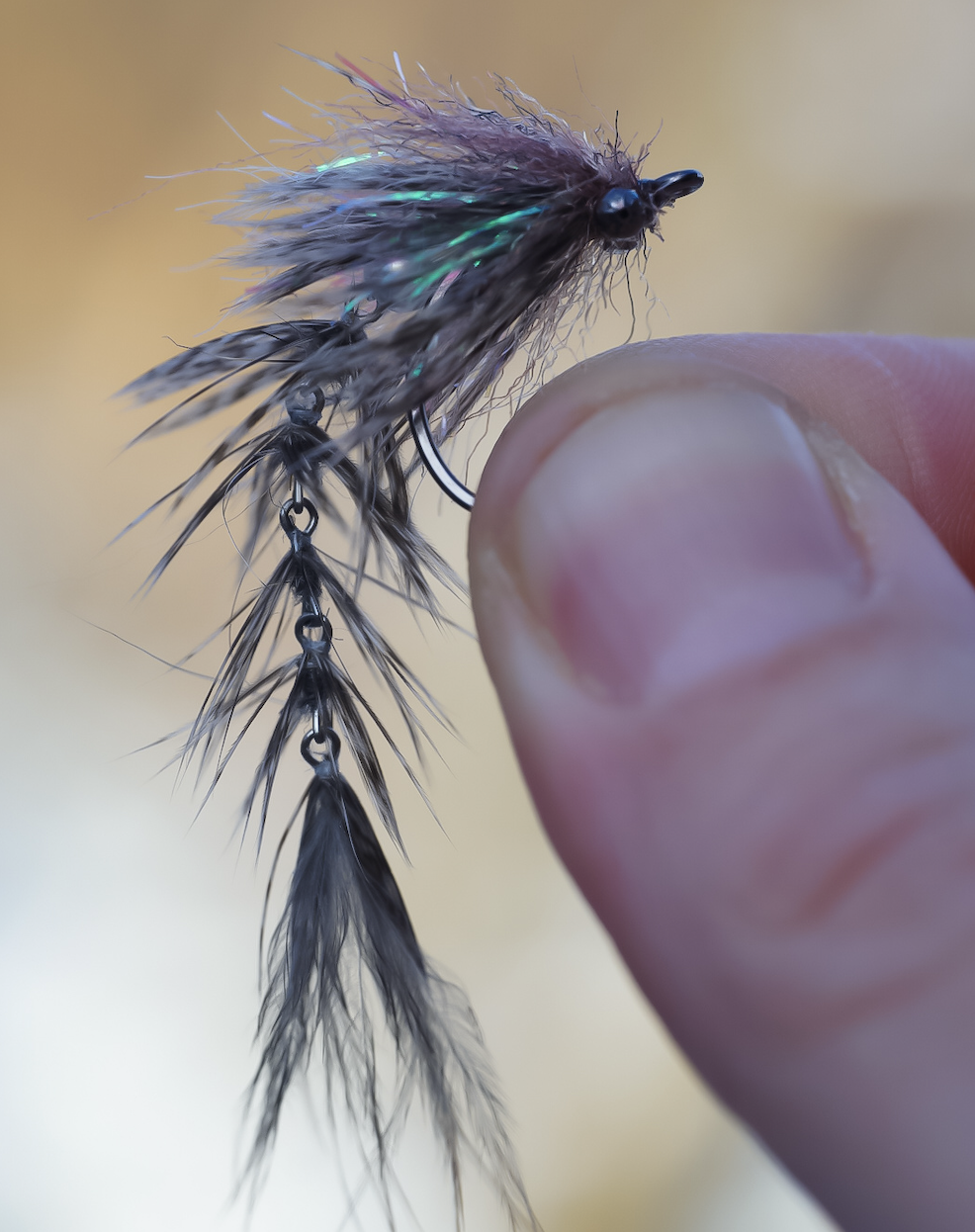
Movement is the key! Every material has its own advantages. I love combining materials with different movement qualities in the same fly. For example, a stiffer rooster cape feather for palmer hackle paired with a much softer spey feather as front hackle. This combination gives great profile and movement at the same time. I can’t say this enough — use far less material than you think. Otherwise, the fly becomes a bulky blob without the ability to pulsate. You can still catch fish on bulky flies, but in my experience they lack that natural, alive look that triggers strikes. I use both synthetic and natural materials. Natural materials like feathers and fur often make flies more natural in shape, movement, and color. But synthetic materials such as dubbing and craft fur offer different possibilities. When fishing with light gear like I do, it’s crucial that bigger flies don’t become too heavy. Synthetics are excellent for this because they don’t soak up water like marabou or other natural materials tend to. In early spring, when water temps are low and sea trout metabolism is slower, what changes do you make in size, weight, or silhouette compared to late summer when baitfish are abundant and fish are more aggressive? Winter fishing can be difficult, but also rewarding like no other season. This is the time when you might catch a trophy trout of 5 kg! I still haven’t landed one of those winter monsters, but it’s a dream of mine. These big fish are often found on rough coastlines where the water gets deep close to shore — but they still come in to feed in very shallow water. I like using smaller flies in provocative colors, like fluorescent pink. I caught my personal best sea trout — 4.3 kg — on a beautiful frosty morning on a synthetic pink fly. A slow retrieve can be the key, so I recommend using only lightly weighted flies that have a long hang time when you pause the retrieve. The fjords have just cleared of ice in the last weeks, and this signals the beginning of spring. Some of the first prey items are scuds in shallow areas that get heated up by the sun — and the sea trout know this. In early spring you can also encounter ragworm swarms, with worms up to 20 cm cruising in high numbers. These events can be extraordinary if you hit them right, or incredibly frustrating if the trout are already full. My goto flies are smaller gammarus patterns early, and later in spring shrimps and baitfish. I always keep some larger worm flies in the box as backup.
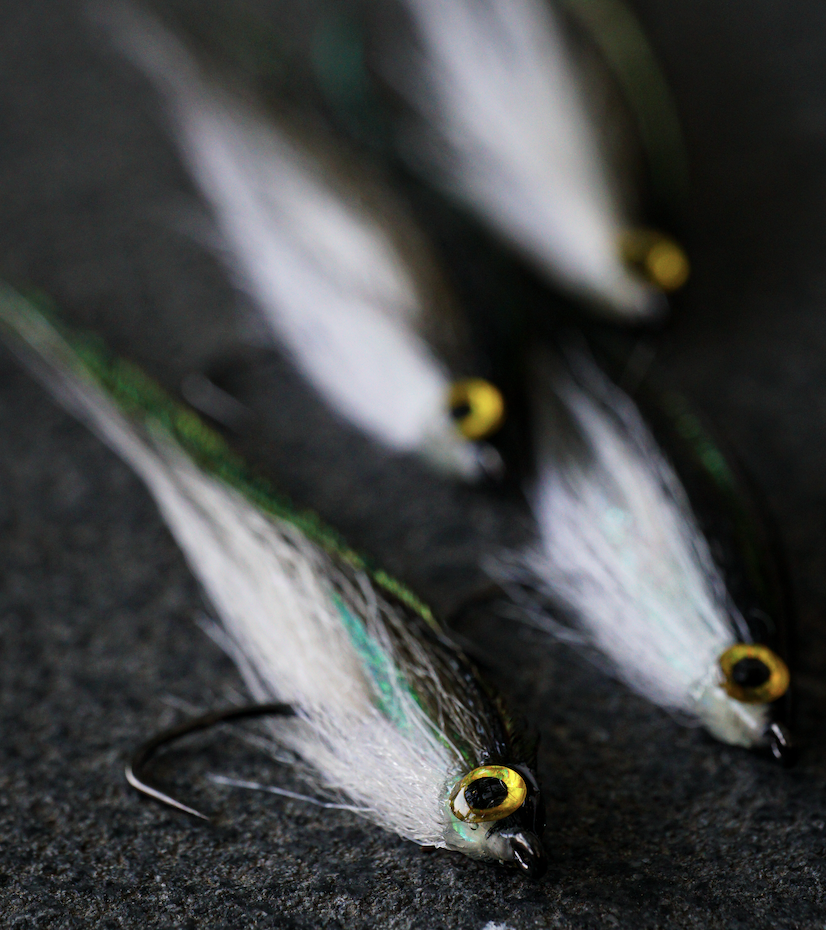
Sea-run brown trout are notorious for following flies without committing. From your experience fishing Danish coastlines, what fly design elements consistently turn followers into eaters — is it contrast, pause on the retrieve, translucency, or something else?
There is no solution that works every time! I can only share my experiences and what I hear from others. Knowing there are trout in front of you but being unable to get them to bite may be the most frustrating thing an angler can experience — even more frustrating than losing a good fish. But be patient! Fly fishers have an advantage over lure anglers because we can downsize our flies and make long pauses that lure anglers can only dream of. When you see a trout following your fly, your pulse rises — but you must stay patient. The fish is nearby, and there is a high chance that more fish are around. You don’t want to spook them. Count to ten and cast again with the same fly. If you know where the school is, avoid casting directly over them. Instead, cast several meters beside them. Let your fly sink for a long time. Make long pauses during the retrieve. The suspense in those seconds is amazing — I forget everything else in the world. If you don’t get a reaction, then it’s time to change flies. I downsize and choose a small unweighted fly in natural colors. Keep varying your retrieve: a few fast strips followed by a long pause, or small quick strips followed by slow, long ones. Variation is the key! If you keep getting only followers, I move along the coast to let the fish rest. I return half an hour later and try again. The hunt is on!
If you follow me on Instatram and YouTube you will find inspiration and tutorials for own flyting
Links:
Youtube: www.youtube.com/@Danish_fly_tying
Instagram: https://www.instagram.com/danish_fly_tying?igsh=ZXYyNTZpZXI0ajJx

Jens Skaerbak represents a side of fly fishing that doesn’t cut corners. His approach is grounded in time on the water, adapting to conditions, and understanding that small details — like material choice or how a fly suspends during a pause — can make the difference between a follow and a committed eat. In a space where trends come and go, his work reinforces something more lasting: confidence built through experience. Fish light when it matters. Tie sparse when it counts. Let movement do the work. And most importantly, stay willing to adjust — because coastal trout will force you to. If you’re looking to sharpen your understanding of sea-run brown trout or refine your fly tying for real-world conditions, following @danish_fly_tying is time well spent. This is exactly the kind of angler Fly Life Media exists to highlight — someone contributing to fly fishing culture through proven knowledge, not noise.
