

Inside the Challenges of New Zealand Backcountry Trout
with : flyfish_adventures_worldwide
Some anglers are shaped by the waters close to home. Others are defined by the willingness to go far beyond them. The angler behind @flyfish_adventures_worldwide represents the latter — someone whose pursuit of fly fishing has taken him across continents, deep into backcountry terrain, and into some of the most technically demanding trout fisheries on the planet.
Raised in Switzerland and drawn early to time spent on the water, his foundation was built chasing pike, carp, and trout in alpine lakes and rivers. But like many serious anglers, the deeper connection to fly fishing came later — through experience, perspective, and a deliberate decision to pursue challenge rather than convenience. A year-long global sabbatical ultimately redefined that direction, combining travel, wilderness immersion, and fly fishing into a single pursuit that would shape the years that followed.
From salmon and rainbow trout in Alaska and Canada to giant trevally in the South Pacific, his journey has covered diverse species and environments. Yet it is the remote headwaters of New Zealand that have become central to his evolution as an angler. Known for crystal-clear rivers, large wild brown trout, and a style of fishing that demands precise observation and technical presentation, New Zealand represents one of the purest forms of modern sight fishing.
Backcountry fly fishing in these environments requires far more than casting ability. It demands patience, physical commitment, and an understanding that success often comes down to preparation and execution under pressure. Long leaders, controlled drifts, careful approaches, and the ability to read subtle fish behavior all become essential skills when targeting wary trout in highly pressured water. These are not fisheries that reward shortcuts.
With nearly two decades of consistent time spent exploring New Zealand’s wilderness fisheries, @flyfish_adventures_worldwide has developed a perspective grounded in experience rather than theory. His approach reflects the mindset shared among respected destination anglers worldwide — that true progress in fly fishing comes through time on difficult water, learning from failure, and refining judgment cast after cast.
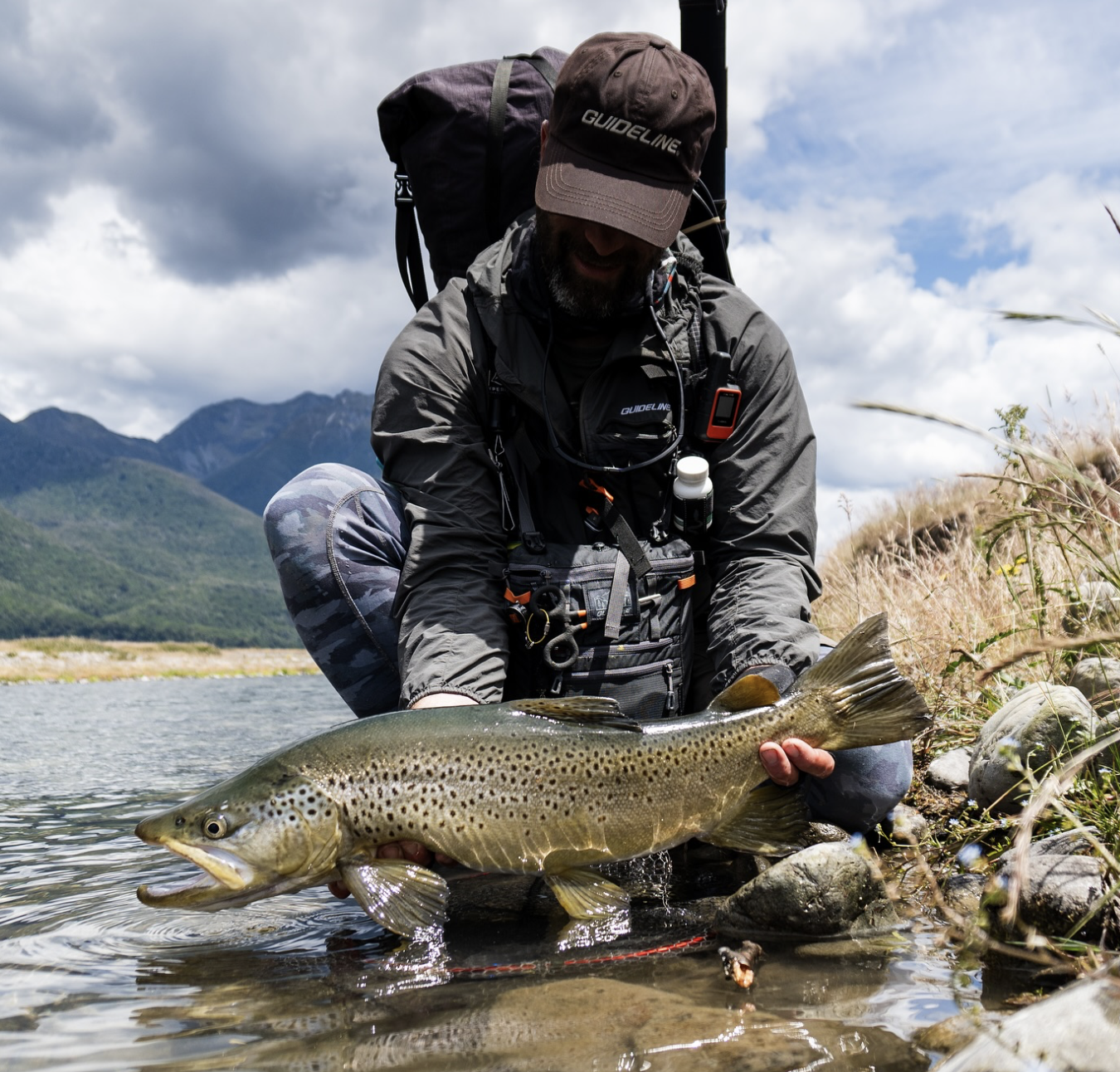
New Zealand has a reputation for technical sight-fishing and highly pressured trout. How has spending time on NZ waters shaped your approach to fly selection, presentation, and reading water?
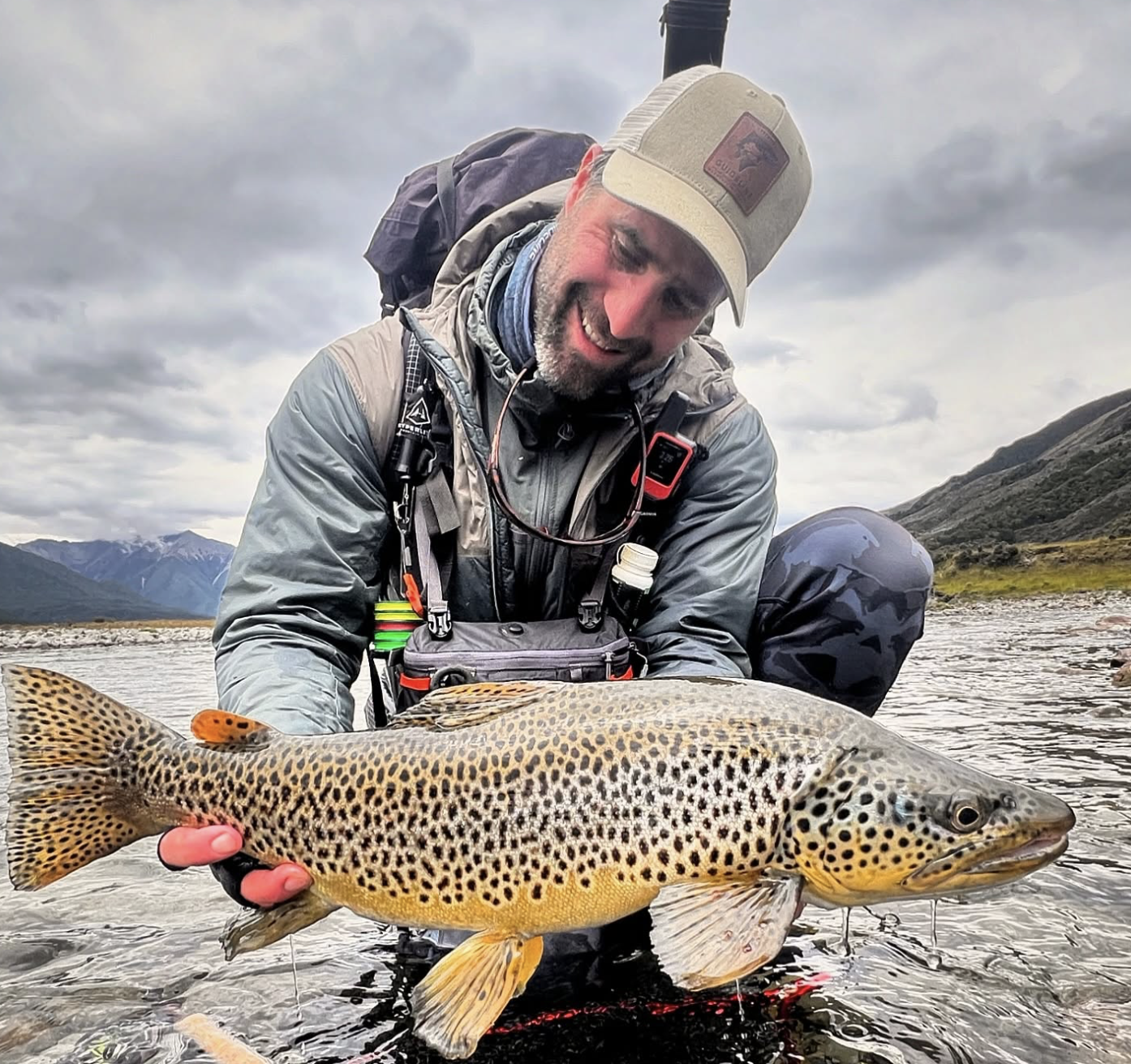
Fly fishing in New Zealand is truly unique. Not only are the trout large, but most of the fishing happens in small, remote streams where everything is done by sight-fishing. In my view, sight-fishing is the ultimate fly fishing discipline because the fish gives you immediate and brutally honest feedback on every cast. If everything is right, you hook the fish. If something is wrong, it spooks.
Over the years, I’ve found that success in New Zealand usually comes down to six key factors.
1. Choosing the right river
Being in the right place at the right time is fundamental. Weather forecasts, river conditions, and experience help guide the decision — and fortunately New Zealand offers an incredible and endless variety of options.
2. Spotting the fish
This is the single most important skill. If you can’t spot fish early and clearly in the water, catching them becomes extremely difficult.
3. Approaching the fish
New Zealand trout are incredibly wary. Clear water and fishing pressure make them very sensitive, so stalking a feeding fish without being detected is often the hardest part of the entire process.
4. Setup and fly selection
Long, fine leaders are essential. Interestingly, fly selection is often less critical than many anglers think. In most cases New Zealand trout aren’t particularly selective — presentation matters far more.
5. Casting and presentation
You don’t need to be a world-class caster. If the approach is right, the casts are often short. But you must be comfortable casting long leaders with two or three flies, often into a strong headwind. Casting ist one thing, but presentation is everything — even the slightest drag will usually end in disaster.
6. Landing the fish
Hooking an eight-pound brown trout on a 4X or 5X leader in a fast backcountry stream is where the real challenge begins.
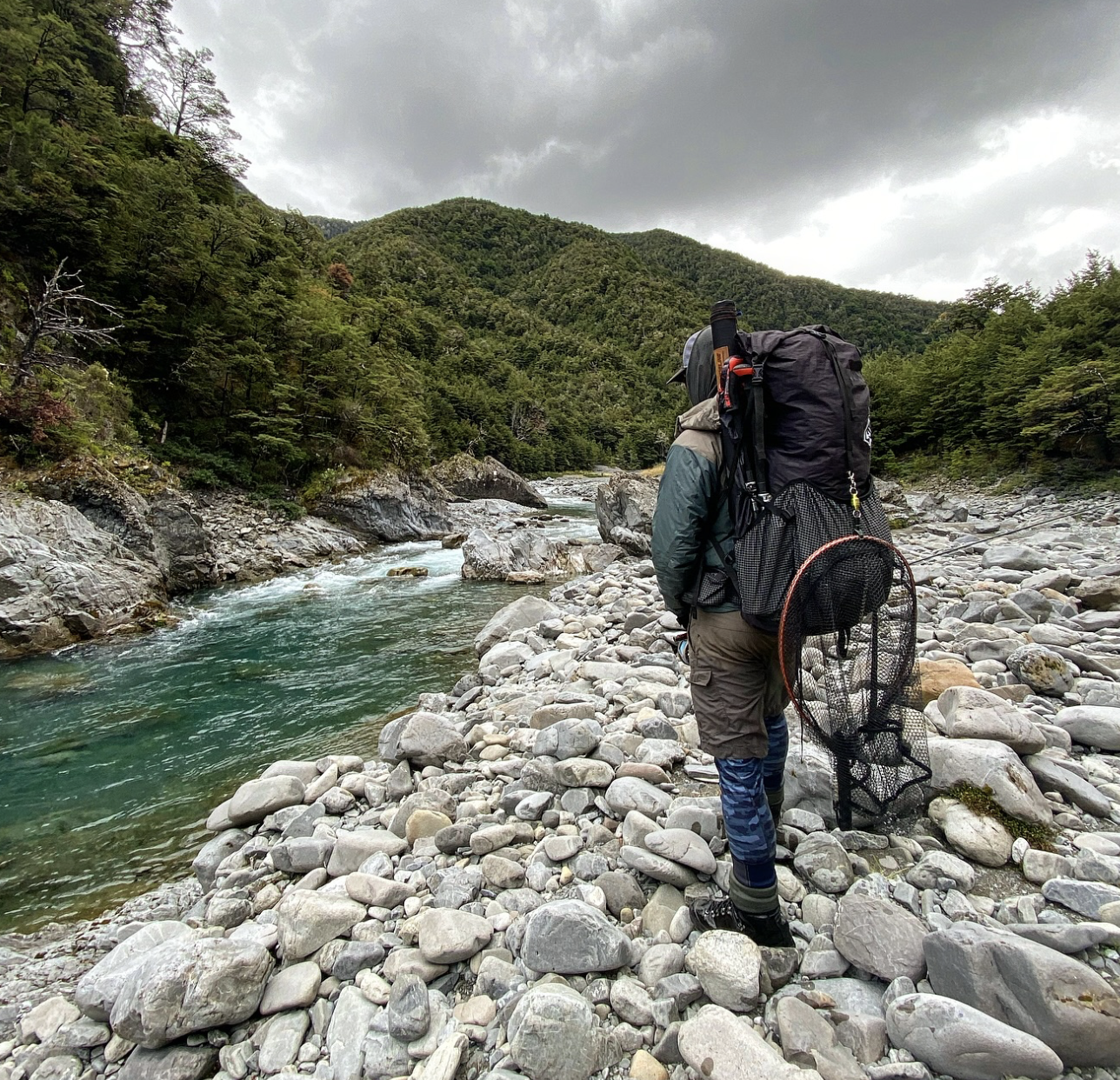
When you step into a new country or fishery, what’s your process for adapting quickly — both in understanding the water and respecting the local fishing culture?
Preparation and humility are key. Whenever I fish a new destination, I try to learn from local anglers first — their knowledge of the water, the fish, and local traditions is incredibly valuable.
At the same time, I spend a lot of time simply observing: watching the river, studying insect activity, and paying attention to fish behavior. That combination of local insight and careful observation usually helps me adapt fairly quickly.
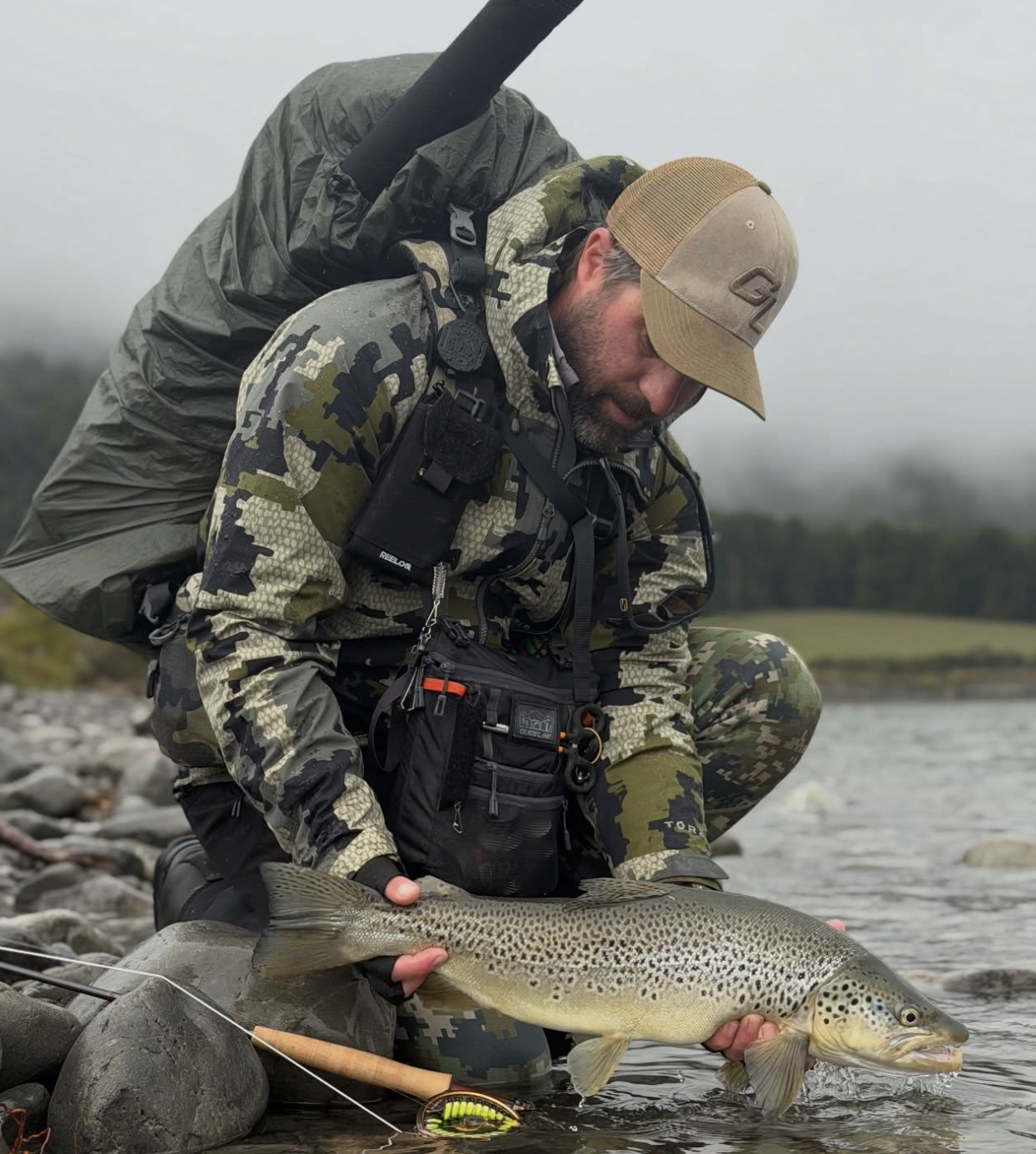
Adventure fishing often comes with unpredictability — weather shifts, missed shots, tough fish. How do those challenges influence your growth as an angler?
If you want to succeed in places like New Zealand, you need endurance, persistence, and a lot of passion. Uncertainty is always part of the equation — weather, river levels, other anglers, and the mood of the fish are just a few of the countless variables.
Because of that, I plan every backcountry fishing trip according to the Six P’s principle:
Prior Proper Planning Prevents Poor Performance.
Good preparation can’t eliminate uncertainty in the wilderness, but it greatly improves your chances.
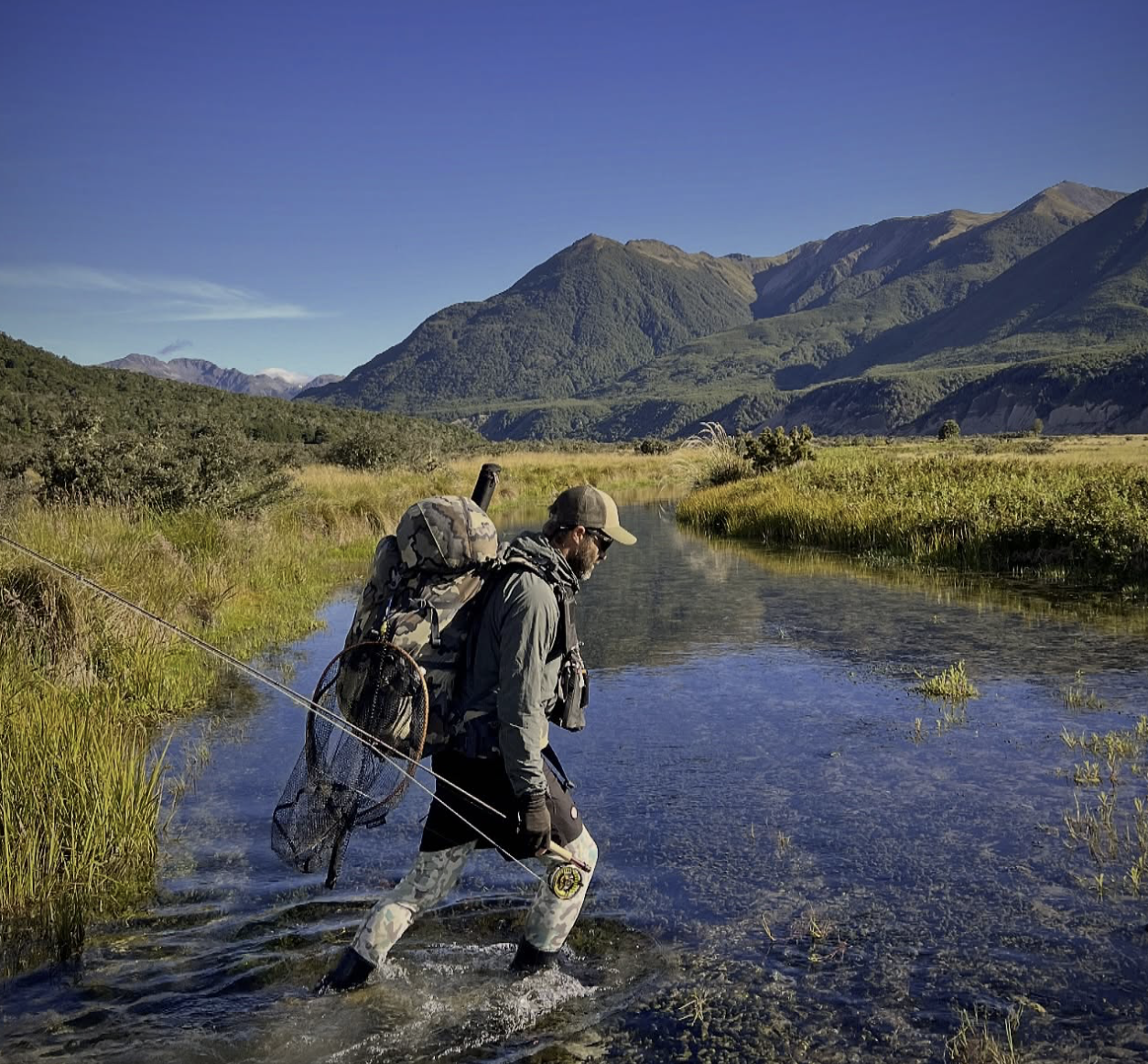
Take us back to the beginning — what first drew you into fly fishing, and when did it evolve from a hobby into a true passion for adventure?
I’ve been fascinated by fishing since I was a young boy. Growing up in Switzerland, I spent nearly every spare moment on the water — chasing pike and carp in the Midland lakes and trout in alpine rivers.
After college, life took me in a different direction. Switzerland requires mandatory military service, so I completed my basic training and later went through Special Forces training as a long-range reconnaissance parachute trooper. During those years there simply wasn’t any time left for fishing, and other priorities took over. When I later started a career in banking, my passion for fishing had almost disappeared.
Everything changed about 17 years ago when I had the chance to take a one-year sabbatical. I decided to combine my love for travel, wilderness, and fly fishing and set off on a round-the-world journey — fly rod in one hand, survival kit in the other, and a backpack on my shoulders.
During that year I fished across some incredible places: salmon, pike, and rainbow trout in Alaska and Canada; carp in Southeast Asia; giant trevally and tuna in the South Pacific; and brown trout in Russia, Mongolia, New Zealand, and Patagonia.
But it was in New Zealand where something truly clicked. Sight-fishing for large brown trout in remote, crystal-clear headwaters completely captivated me. Reaching those rivers often means hiking through untouched wilderness, crossing deep gorges, pushing through dense bush, and dealing with relentless sandflies and wasps — all just to reach a single river you hope holds great fish. There are no roads, no trails, and certainly no luxury lodges. It’s just you, your fishing partner, and raw wilderness.
That first encounter with New Zealand’s backcountry nearly two decades ago changed everything. Since then, my passion for fly fishing — and especially chasing big sight fished brown trout — has only grown stronger. I’ve returned to New Zealand every year, often spending between two and seven months exploring its backcountry rivers. Over time I’ve built strong connections within the local fishing community and today I’m fortunate to be considered one of the more experienced anglers on those waters.
Looking ahead, what’s next for you — a specific destination, species, or new direction you’re excited to chase?
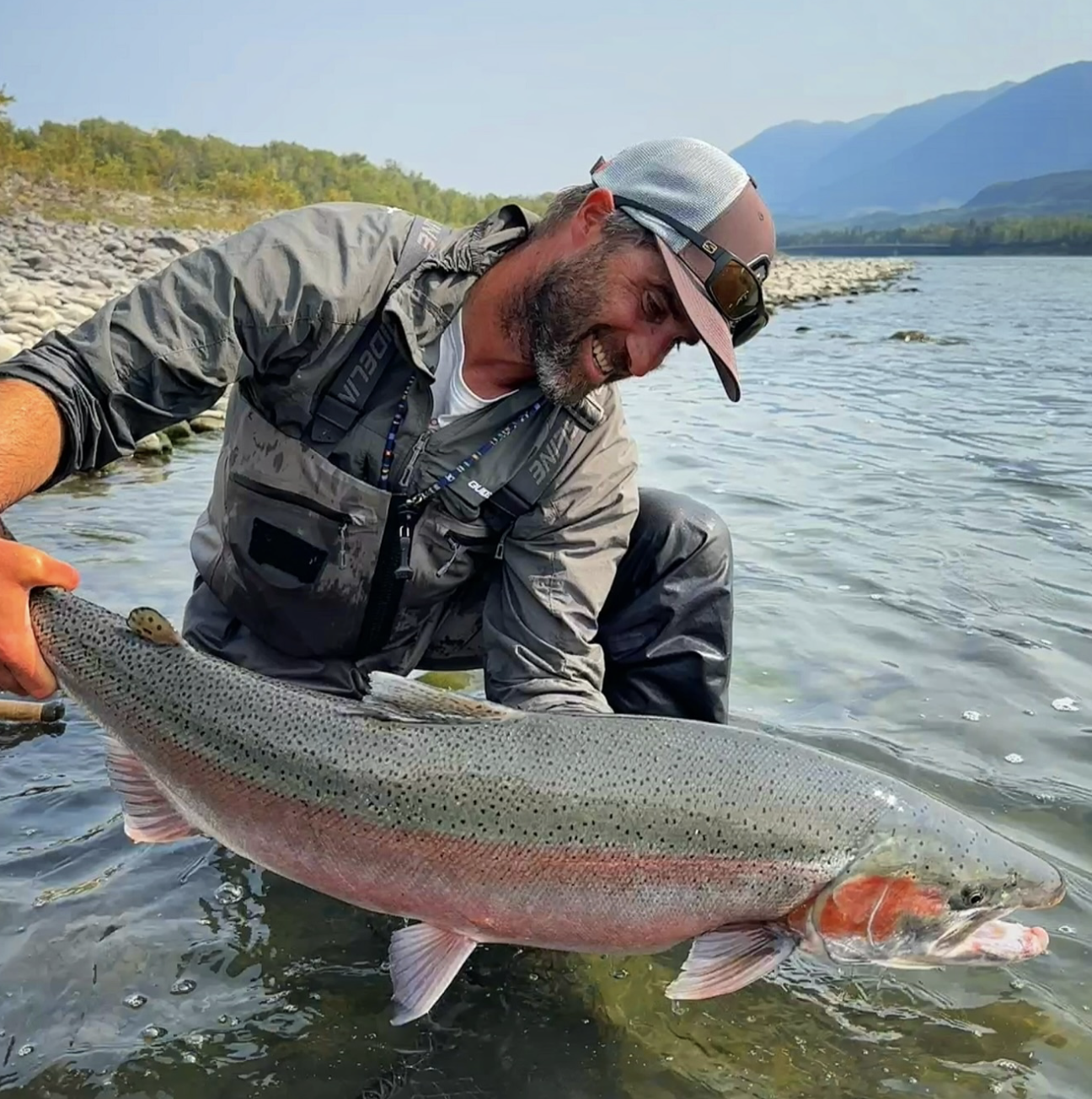
This August I’ll spend two weeks steelhead fishing in British Columbia. Then, as every year, I’ll head back to New Zealand in December for about five weeks.
Balancing these trips with everyday life isn’t always easy. I’m a managing partner at a multi-family office, a husband to a woderful an very tolerating wife, and the father of two young boys. I am also a parachute instructor in the Swiss Air Force. With all that, time for additional expeditions is limited — which probably makes every trip even more special.
Destination fly fishing continues to evolve, but the core principles remain unchanged: preparation, observation, and respect for the environments that shape the fish we pursue. Anglers like @flyfish_adventures_worldwide help preserve that standard by focusing on substance rather than spectacle, demonstrating what long-term dedication to technical water can produce.
From the alpine rivers of Switzerland to the demanding sight fishing conditions of New Zealand’s backcountry, his journey reflects a commitment to fly fishing as both discipline and exploration. These are the kinds of anglers who continue to push fly fishing culture forward — not through noise, but through consistent time spent where the margin for error is small and the rewards are earned.
Fly Life Media exists to spotlight anglers who carry that mindset into the water. If you appreciate technical trout fishing, destination fly fishing, and the pursuit of wild fish in wild places, @flyfish_adventures_worldwide is an angler worth following
