

Trophy Brown Trout Tactics and Modern Fly Fishing
With : Karl Önning
There are anglers who enjoy catching fish — and then there are anglers who dedicate their time to understanding the behavior of the biggest fish in the river. Karl Önning (@karl.onning) falls firmly into the second category. Known for his deliberate approach to swinging flies for trophy brown trout, Önning represents a growing segment of modern fly fishing culture focused less on numbers and more on meaningful encounters with truly exceptional fish.
Based in Sweden and deeply connected to the demanding waters of Scandinavia, Önning has developed a reputation for targeting large, migratory brown trout using thoughtful presentation, purposeful fly design, and a disciplined understanding of how big fish behave under pressure. His patterns, including the well-known “Karl’s Killer Graboid,” reflect a philosophy grounded in efficiency — flies designed not simply to attract attention, but to perform in real river conditions where structure, current, and light dictate opportunity.
Önning’s approach is rooted in the belief that the largest trout operate differently than the rest of the population. These fish favor security, depth, and structure — often feeding most confidently under low light or full darkness. Rather than relying on oversized flies or aggressive retrieves, his system prioritizes controlled speed, subtle presentation, and strategic positioning. It’s a method built on observation and experience, not trends.
Within the modern fly fishing landscape, where streamer tactics continue to evolve, Önning’s perspective stands out for its clarity and restraint. His commitment to reading water carefully, adapting techniques to conditions, and designing flies that fish effectively in complex current seams reflects a level of intentionality that serious anglers recognize immediately.
For anglers interested in the technical side of swinging flies, trophy brown trout behavior, and thoughtful fly tying, Önning offers insight shaped by countless hours spent fishing challenging water where success is measured in moments — not numbers.
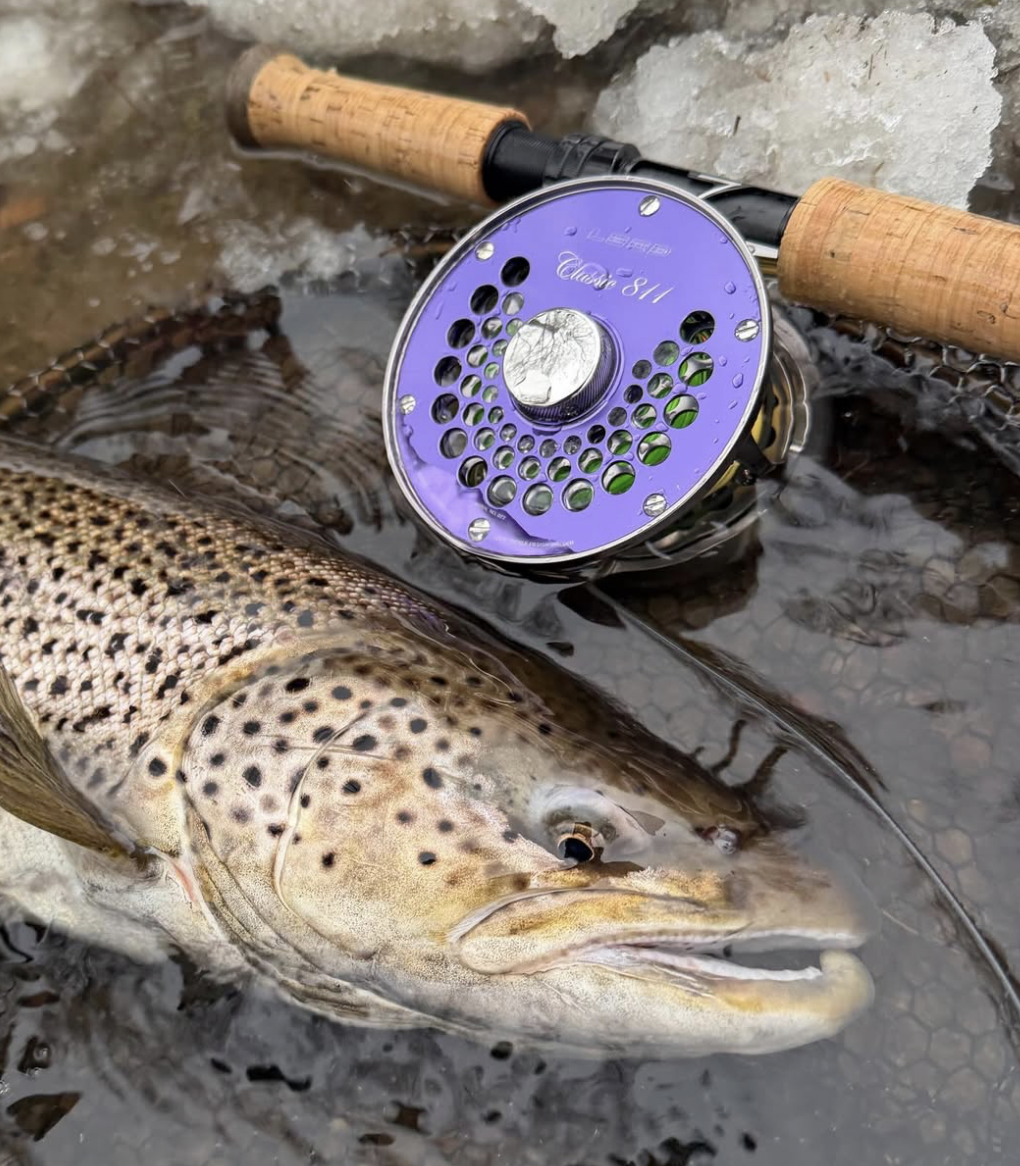
What first drew you to swinging flies for brown trout, and how has your approach evolved since those early days?
It came very naturally as I gradually moved from dry-fly and nymph fishing for trout, toward wanting to catch the true trophy trout. Catching large numbers of fish has never interested me, and to get in contact with the biggest trout, swinging the fly during the darkest hours of the day is by far the most effective approach.
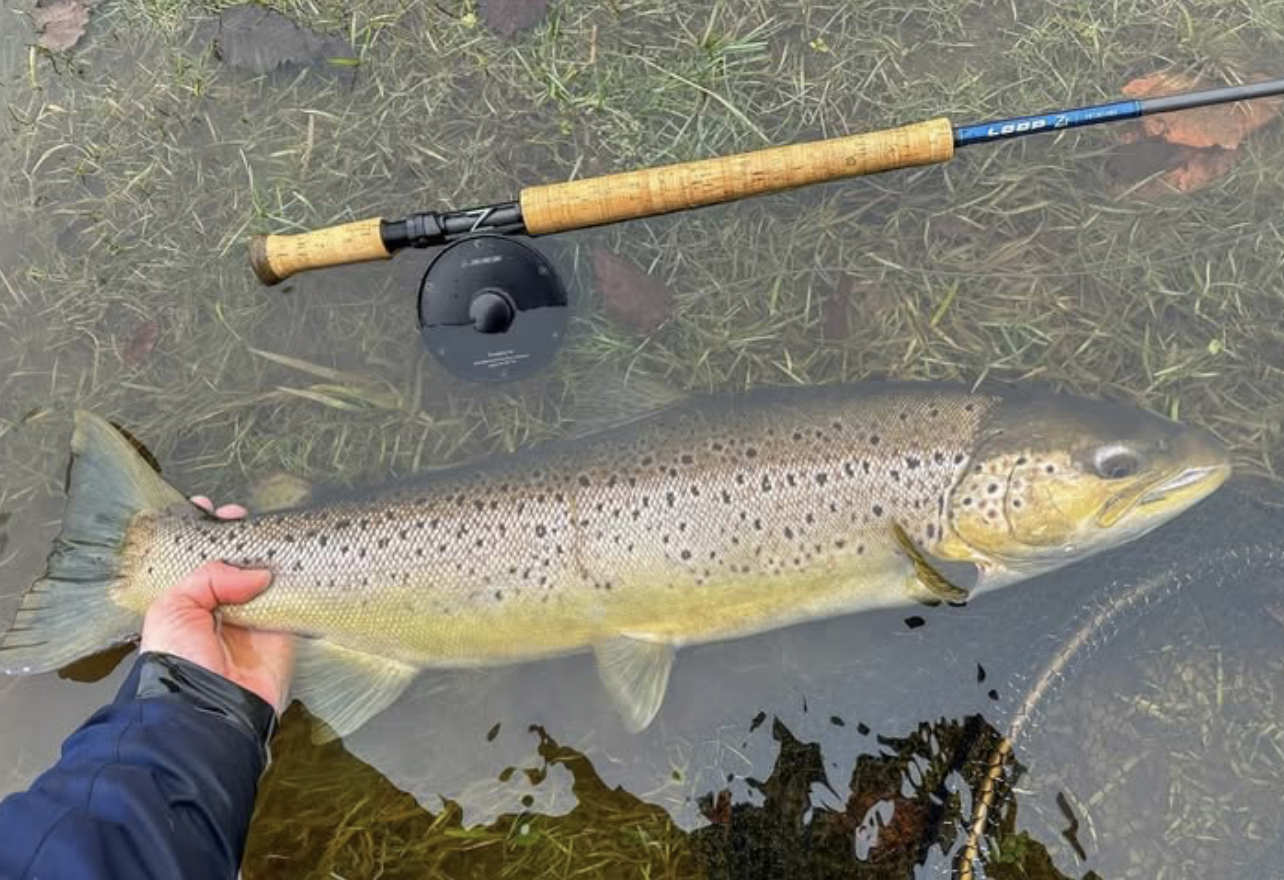
Your fly designs, like the “killer graboid,” are clearly tailored for big trout — how do you choose patterns and presentations when targeting trophy browns?
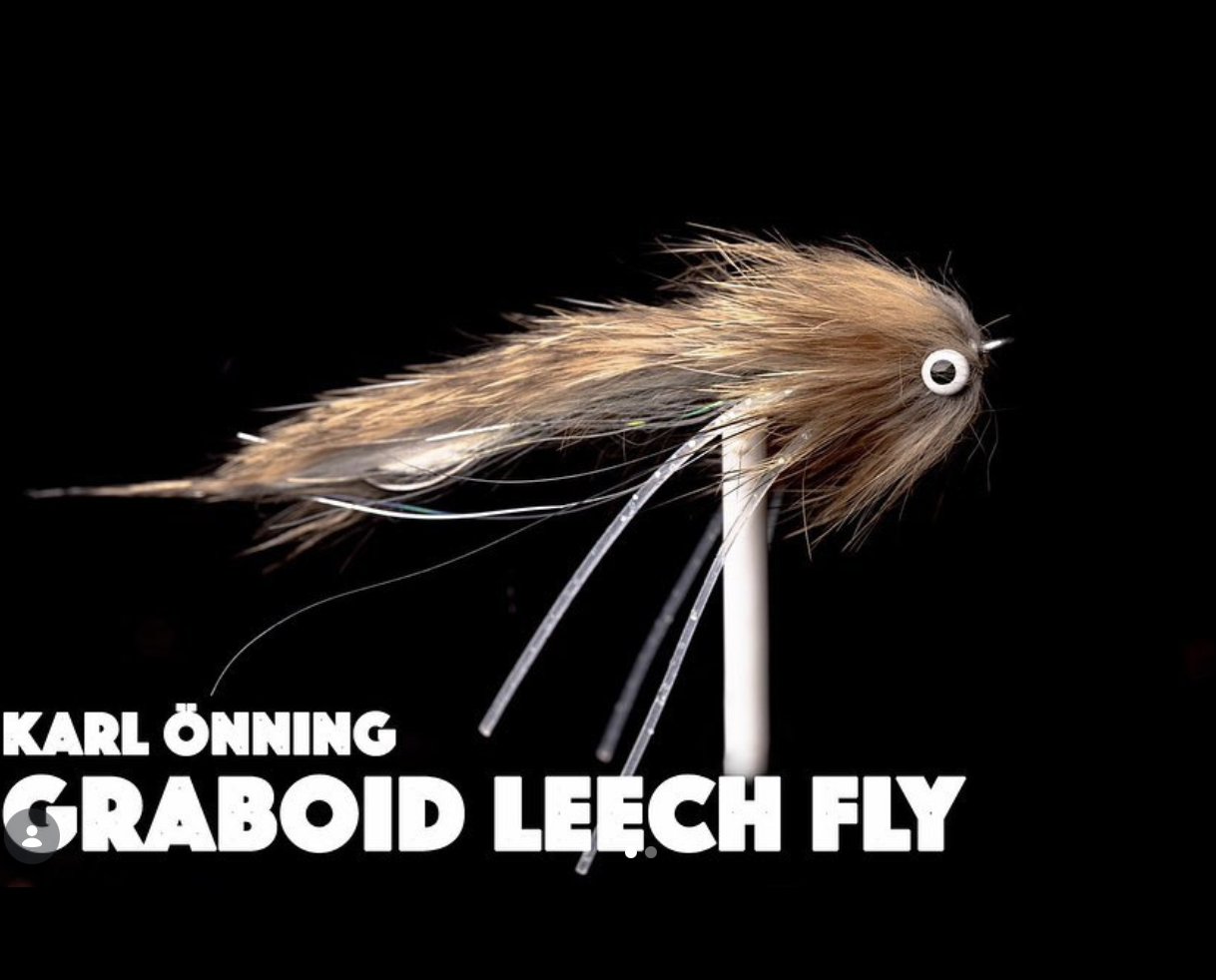
A 6–7 cm Karls Killer Graboid is a fantastic fly for our Swedish rivers. The grey version can imitate many of the different baitfish that large trout prey on, and it performs best during daylight hours. At that time, I mainly target trout in the faster sections of the river and focus heavily on fishing around large rocks and in deeper holes. In daylight, a big trout wants to hold in a secure position with cover overhead — either deep down or in fast water where the current itself acts as that cover. Because the hook on a Karls Killer Graboid points upward, it has a major advantage: it usually bounces off the rocks instead of snagging from time to time, as a standard hook fly would. Apart from the “KKG” and nymphs, I fish almost exclusively with flies tied on tubes.
As darkness approaches, I switch to fishing 100% with dark flies. At that point, I either use variants of Sunray Shadow in 9–10 cm lengths or a muddler of 5–7 cm.
During the daytime, I rarely fish the fly particularly fast. Instead, I focus on achieving medium speed — or letting the fly pause briefly exactly where I believe the fish is holding. When it starts moving again, it often triggers the strike.
During the darker hours of the day, I focus on fishing the fly quite slowly.
When chasing giant brown trout in northern Sweden or other big water, what are the key techniques or strategies you rely on to read currents, depths, and fish behavior?
I strongly believe in choosing the right technique for the specific water, the prevailing conditions, and the time of day. During daylight hours, nymph fishing should not be underestimated! Either by swinging a rubber-legged nymph deep through a slower section, or by fishing the deepest holes in the current using the Euro-nymphing technique.
As a rule, the very largest trout are most active during the darkest hours of the day — though of course, there are always exceptions. The trout leaves its well-protected holding position in the river’s deeper or faster sections to move into shallower water. I believe this is because the trout wants to monitor its surroundings, to feel secure, and to hunt more efficiently. This fits with my impression that trout are somewhat neurotic creatures — easily spooked by careless wading or casting, yet at times seeming not to care at all. One thing, however, is that they thrive in the darkness. You can even notice a difference during the fight at night, as they tend to fight much more calmly. But again, there are always exceptions.
I focus a lot on moving carefully and making casts that do not disturb the water. My thinking is: if you only get half of a chance, why not give yourself the best possible conditions?
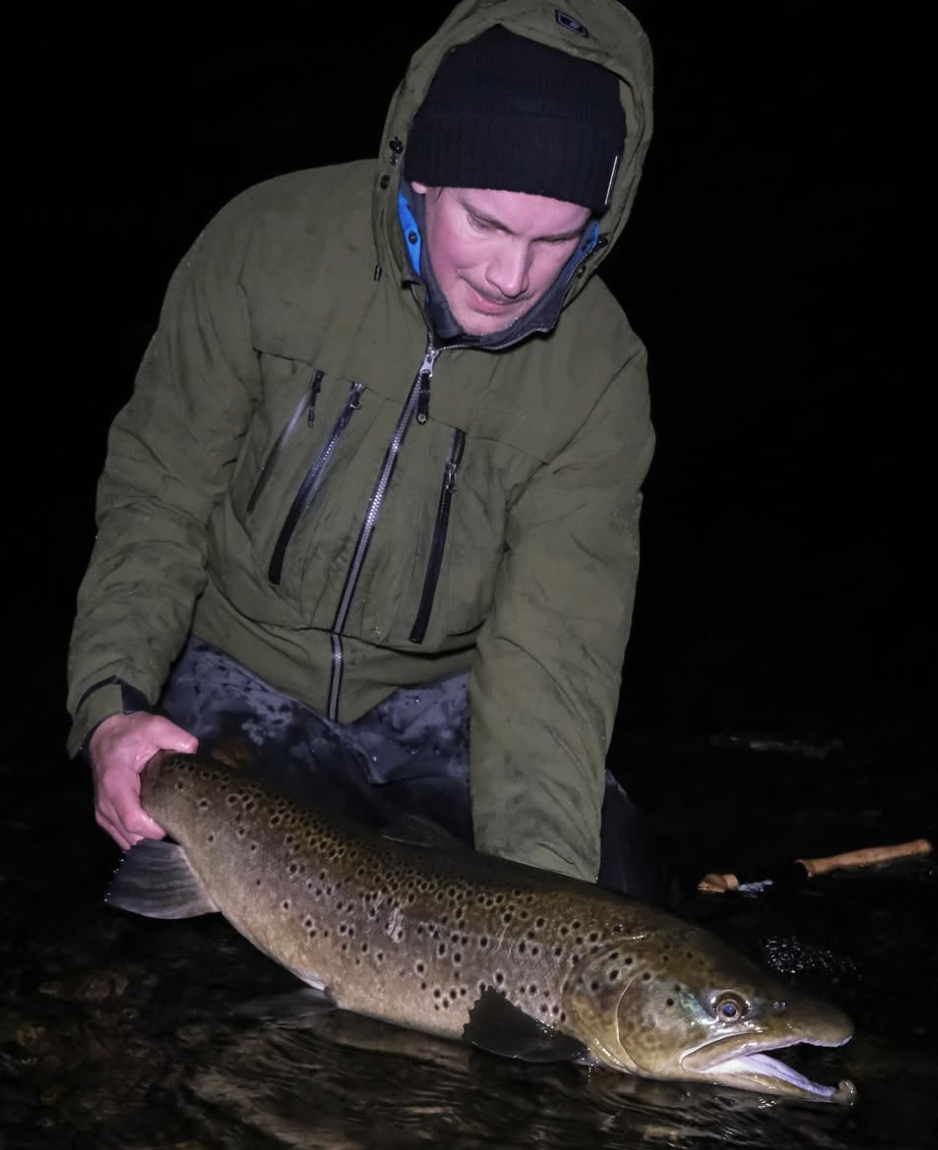
Can you share a memorable battle with a giant brown trout — what did that fight teach you about technique, patience, or respect for the fish?
I went on a trip with two close friends. The weather was anything but good. The rain was pouring down, and a normal person would have gone home and crawled into bed — just like my friends did.
Still, I had a strong feeling that tonight was the night… Because of these conditions, the night was exceptionally dark. I could barely see anything. I focused entirely on making sure my casts straightened out, at a 45-degree angle downstream. I fished methodically in the darkness, and right in the area at the head of the rapid where something could happen, a trout struck with tremendous force. Shortly after the take, the trout jumped, and from the little I could see — and from the splash — I realized it was a trout of enormous size. It was as if it wanted to show me, “I am big, and you will not win this one.”
The trout then went downstream at lightning speed, toward the head of a massive rapid, and I eased off the pressure as much as I dared. The trout then stopped just above the rapids. After that, I maintained very gentle pressure until the fish swam upstream. When it finally came level with me, I gave it hard pressure and shortly after got it into the net.
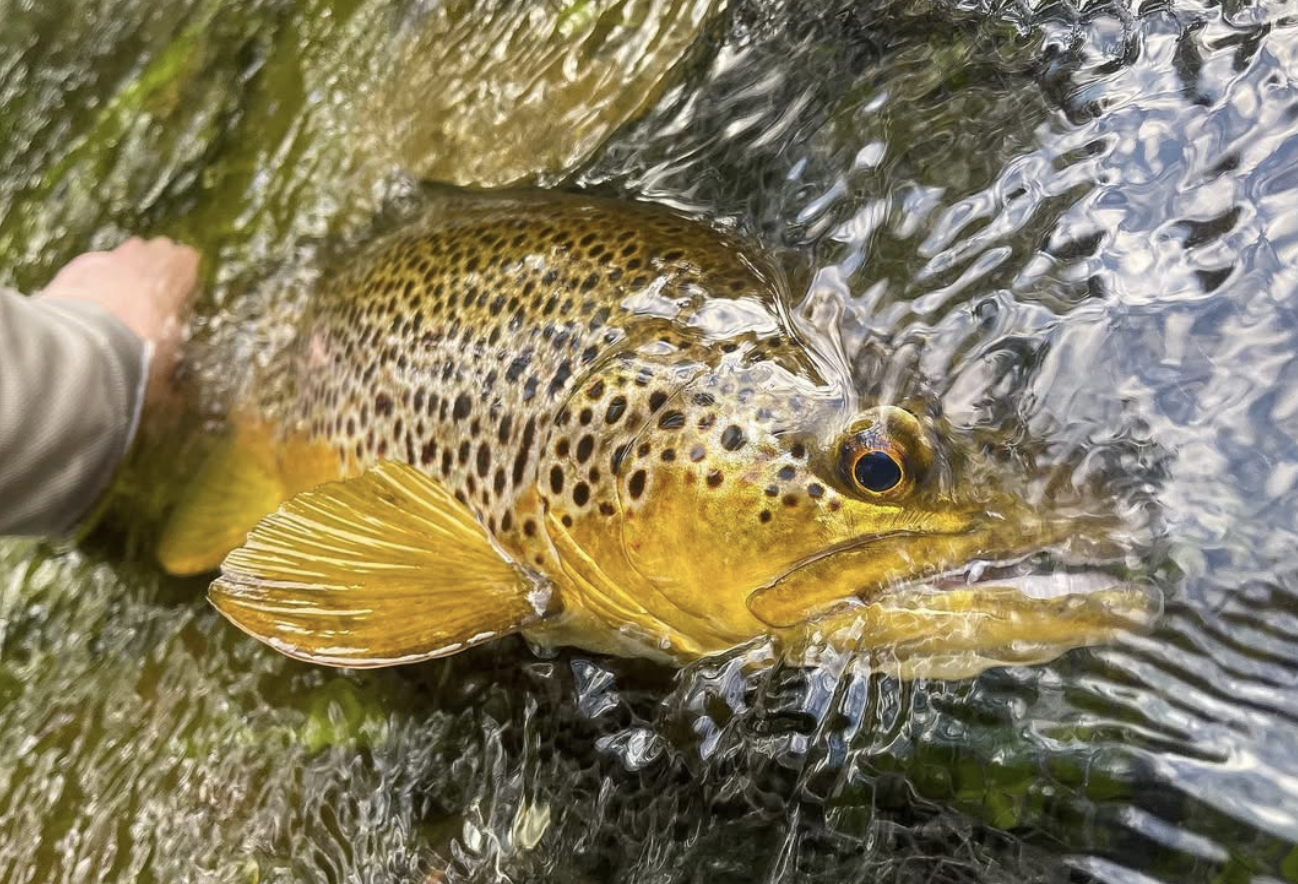
Varying the pressure during the fight makes it possible to control how the trout behaves. If you ease off the pressure on a fish that is positioned slightly downstream, a belly will form in the line, and the fish will feel the pressure from behind rather than from above, which is what would happen if you kept heavy pressure on it. The trout tries to swim away from the pressure and will therefore move upstream instead of bolting downstream.
For anglers ready to step into swinging larger streamers for brown trout, what’s your top advice on gear, water reading, and presentation to improve their chances of hooking a trophy?
If there’s room for overhead casting with a single-hand rod, I primarily choose a 9.6–10 ft #7 rod, to stay as stealthy as possible and leave as little trace as possible. If there isn’t enough space for overhead casting along the river, I use either switch rods — 11 ft #5 to 11.6 ft #7 — or a two-handed rod — 13 ft #7 — depending on the size of the river.
Don’t use flies that are too large. “Big flies, big fish” doesn’t match my view, for several reasons. Of course, my flies aren’t remarkably small, but I’m thinking of, for example, large articulated flies that have been popular over the past 10 years. They aren’t the best type of flies for our Swedish migratory trout. They seem to appeal more to resident trouts.
I tie my flies with heavier wings, such as the ”KKG,” up to a maximum of 6–7 cm. My flies with a thinner wing, such as my variants of Sunray Shadow, has a maximum length of 9–10 cm.
I focus heavily on making sure the fly fishes properly on every cast I make. This becomes especially important when night fishing, when you only feel what you’re doing. Then you need an easy-casting setup, that will deliver even when your energy is on its lowest point.
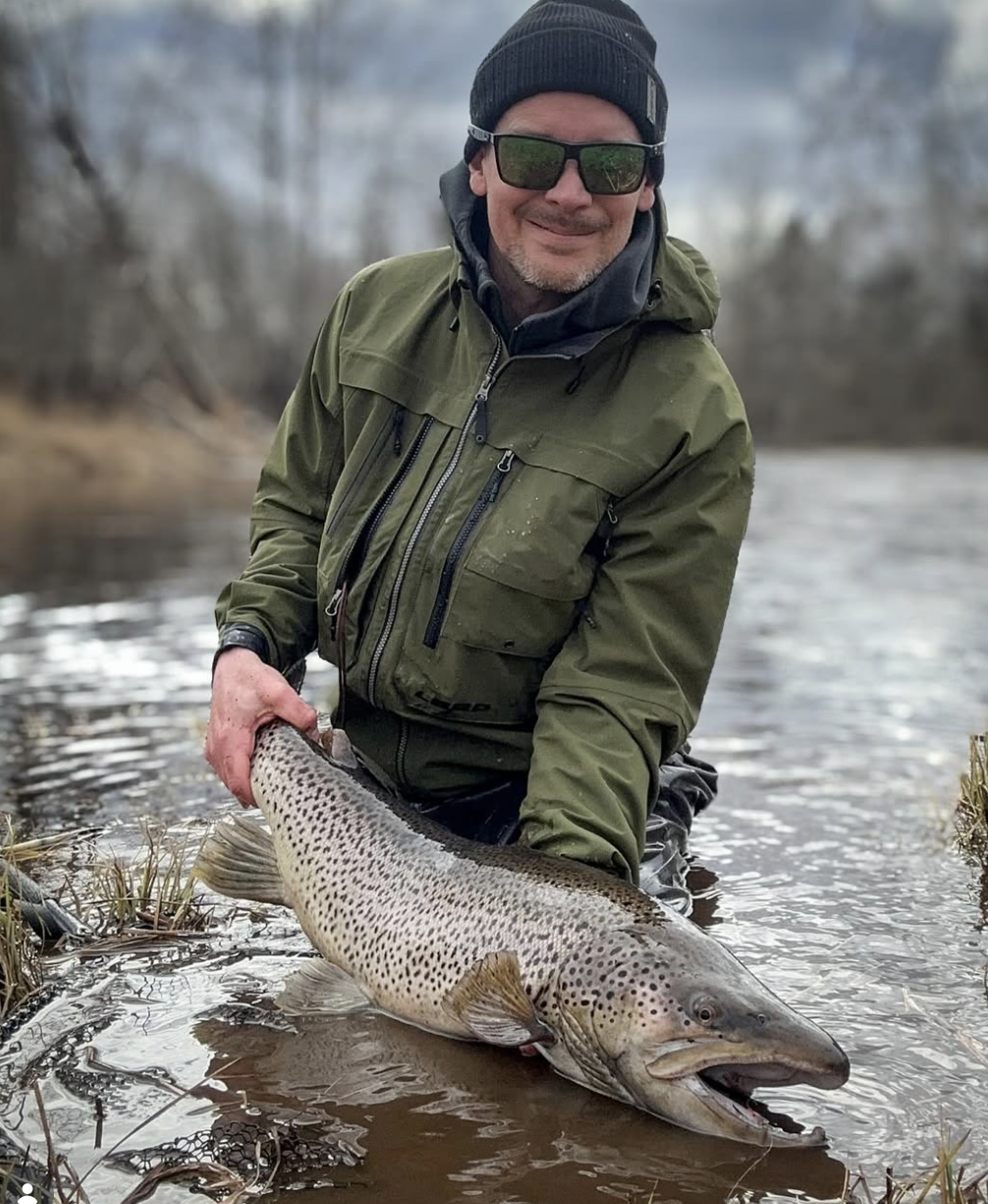
Karl Önning represents the kind of angler who quietly influences modern fly fishing culture through discipline, observation, and time on the water. His approach to swinging flies for large brown trout reinforces the idea that consistency, thoughtful presentation, and understanding fish behavior often matter far more than trends or oversized patterns.
At a time when much of fly fishing media focuses on speed and visibility, anglers like Önning remind us that the pursuit of truly large trout remains a game of patience, precision, and respect for the conditions. His work in fly design and presentation continues to resonate with anglers who recognize that big fish are rarely caught by accident.
Fly Life Media exists to highlight anglers who contribute meaningfully to the culture — those who develop ideas on the water and allow experience to shape their approach. Karl Önning’s dedication to understanding trophy trout behavior, refining presentation speed, and designing purposeful flies reflects exactly the kind of mindset serious anglers appreciate and trust.
Follow Karl’s work to gain insight into a thoughtful, highly effective approach to modern streamer fishing for brown trout.
