

Approach to Streamer Fishing, Fly Tying, and Reading Water
With: villeritvanen
There are anglers who fish… and then there are anglers who commit fully to understanding why fish eat — or don’t. Villeritvanen belongs firmly in the second category. With nearly three decades on the water, his work reflects a mindset shaped by patience, observation, and a relentless pursuit of refinement. This is the kind of angler who studies current seams longer than most people fish them, and whose fly box tells the story of problems solved through experience, not imitation.
Introduced to fly fishing in the late 1990s, Villeritvanen built his foundation the hard way — through empty days, careful observation, and a refusal to rely solely on convention. Early on, the challenge itself became the motivation. Learning to read water, interpret trout behavior, and adapt without shortcuts established a philosophy that still drives his approach today. Success wasn’t immediate, but that first trout fooled on a Coddard Caddis confirmed something deeper than technique — it confirmed a lifelong pursuit.
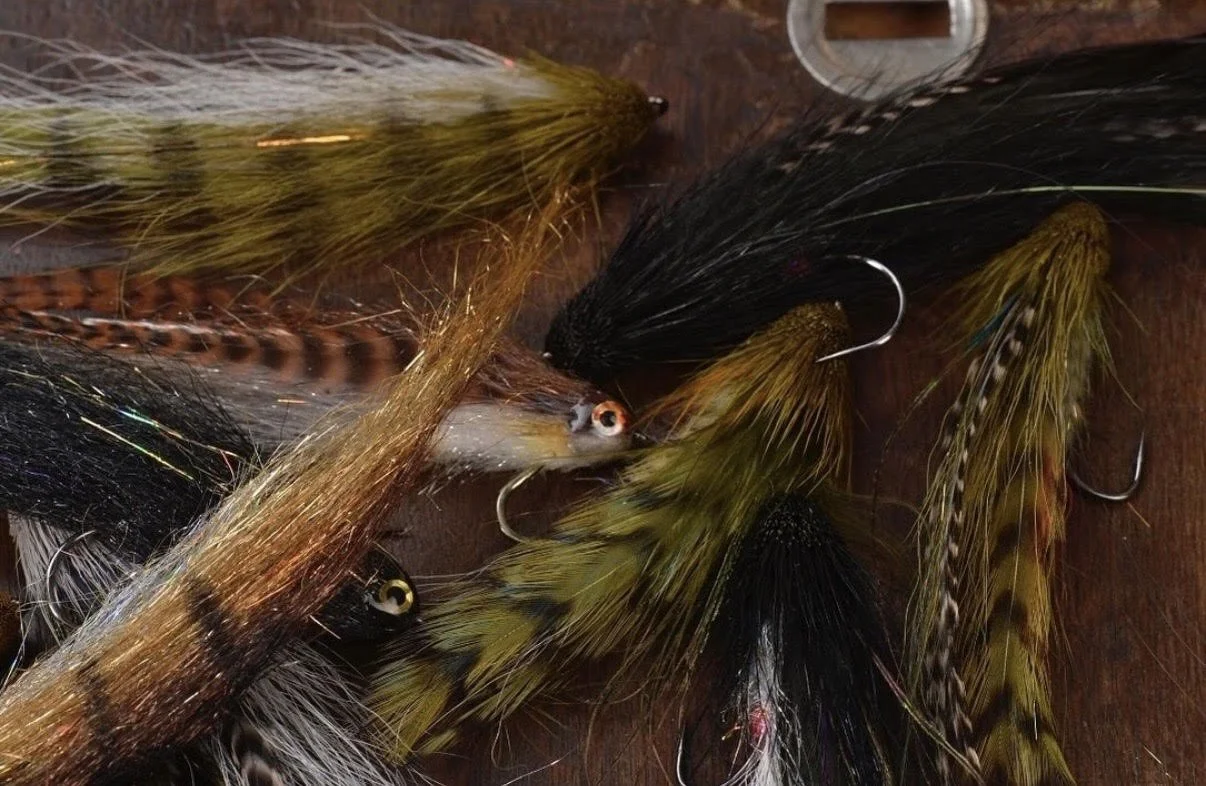
Fly tying quickly became more than preparation for the next season. It became a form of problem-solving. Rather than relying on traditional recipes, Villeritvanen’s patterns are often purpose-built responses to real situations encountered on pressured water. Finnish trout rivers demand thoughtful design, and that pressure has pushed him to refine materials, proportions, and movement characteristics that trigger fish under difficult conditions. Every detail carries intent.
Streamer fishing sits at the center of his approach — not as a trend, but as a discipline that demands confidence, adaptability, and a willingness to fish differently. His work explores the balance between realism and trigger-based design, understanding when subtle translucency matters and when bold movement creates opportunity. The result is a body of work grounded in observation of predatory behavior, hydrodynamics, and the small technical decisions that separate an average fly from a consistently effective one.
Anglers who spend enough time around serious fly shops understand quickly when someone has put in the work. Villeritvanen’s approach reflects that earned credibility — the kind built through repetition, failure, and continuous refinement. His patterns are not designed for trends. They are designed to solve problems on real water.
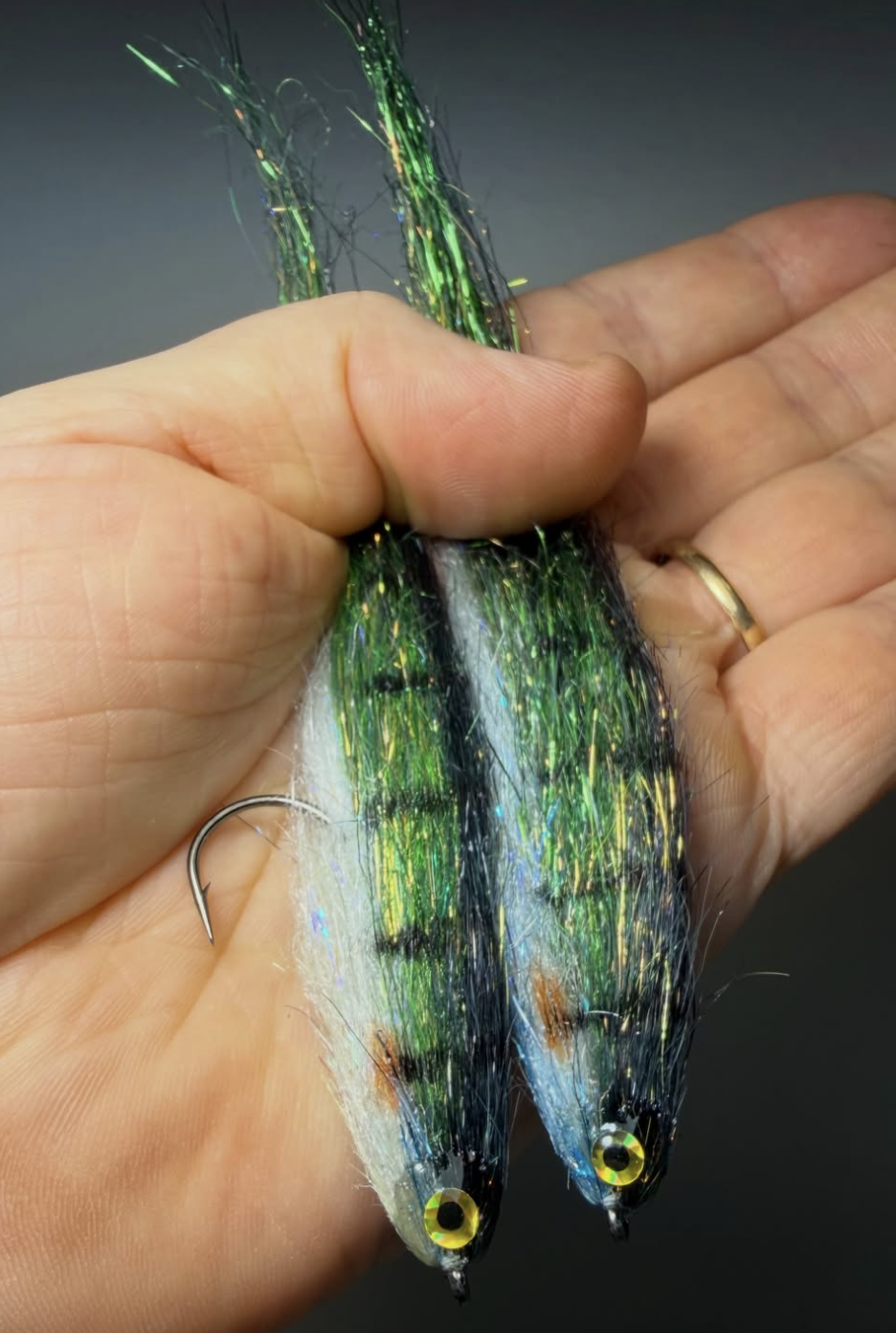
Take us back to the beginning — how did you first get introduced to fly fishing, and what was it about it that made you stick with it?
I’ve been fishing since I was five years old, using different techniques along the way. Nature and moving water have always spoken to me.
I was introduced to fly fishing in the late 1990s by an older, skilled angler who taught me the basics, mainly casting. When he opened his fly boxes and showed me the patterns inside, I was completely fascinated.
In the beginning, everything felt incredibly challenging. Success didn’t come easily, partly because I wanted to learn how to read nature and water myself, to truly earn the fish. There was something powerful and honest about that approach.
After several empty trips, I finally fooled my first trout with a Coddard Caddis. That feeling is still with me today.
Over time, I developed by reading literature and observing more experienced anglers. Still, I’ve had to solve most problems myself, understanding fish behavior, adapting to conditions, and learning through failure. I now have nearly 30 years of fly fishing behind me, and that process of problem-solving has never stopped.
What kept me going was the realization that I had to become smarter than the fish. Water reveals everything. If I rush, I fail. If I don’t pay attention, adapt to conditions, follow nature, and carefully observe the river, I lose opportunities.
Fly fishing became more than catching fish, it became a lifestyle. One that demanded sacrifice. When I was younger, even relationships and work were sometimes on the line because of how deeply I committed to it.
Fly fishing is a lifelong journey. I will never be finished, but I can always become better.
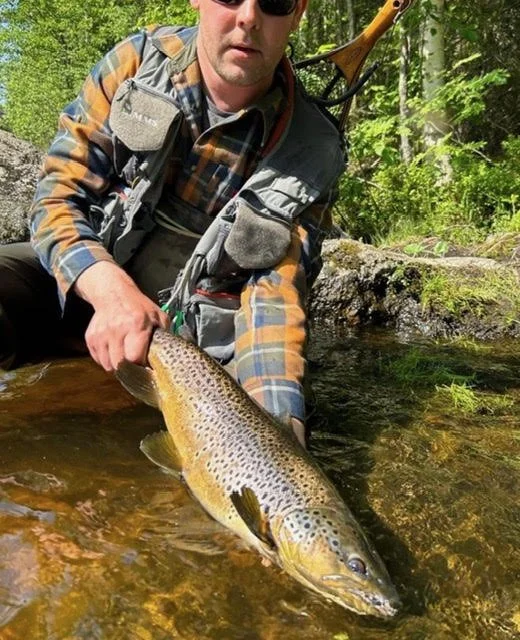
At what point did fly tying become more than just filling a box for the season? What pulled you deeper into the craft?
Fly tying has always come naturally to me. I’m creative by nature, and when I commit to something, I go deep, genuinely, passionately, and with intention.
Tying stopped being just filling boxes for the next season when I realized I was never really tying recipe flies. Most of my patterns were self-designed, unique creations, often the result of solving a specific problem I had encountered on the river.
After difficult fishing days, I would constantly replay situations in my mind. Why did that fish follow but refuse? Was it the color? The movement? The profile? The size? At that point, tying became an extension of observation.
On some Finnish rivers, fishing pressure is significant. That alone forces you to think differently. I began adjusting materials, proportions, and weighting based purely on real river experiences. Every fly became a reaction to something I had seen. If a pattern failed in some way, I wanted to correct it immediately.
In fact, failure was what pulled me deeper into tying.
Streamer tying, especially, changed everything. It’s not just about imitating baitfish. It’s about triggering instinct. Movement, breathing materials, translucency, balance in the water — sometimes realism matters most, sometimes exaggerated triggers like color contrast are more important.
On a broader level, I’ve intentionally questioned common trends. I’ve often heard that as long as a fly resembles a baitfish, it’s good enough. I disagree. From long-term experience, I’m confident enough to say that details matter — especially over time.
Fish are individuals. Some are extremely selective; others react more aggressively. I want to catch both.
Once I understood that, I stopped tying for quantity and focused on purpose-driven design instead.Streamer fishing demands confidence and commitment. What do you appreciate most about that style of fishing, and how has it shaped your approach on the water?
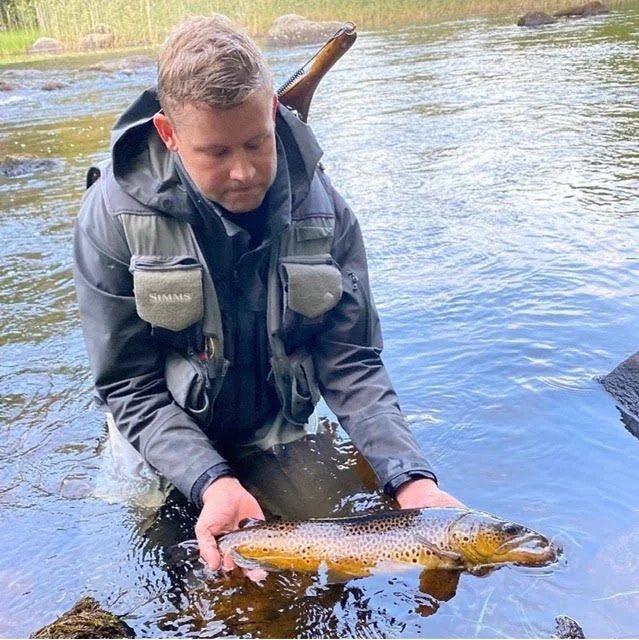
When you’re designing or refining a pattern, what matters more to you — realism, movement, durability, or something less obvious? Walk us through how you think about that balance.
When I design a fly, I start with the whole picture, not just a single factor, while still emphasizing the specific details that each pattern demands. Material knowledge is crucial, especially understanding how those materials behave in moving water.
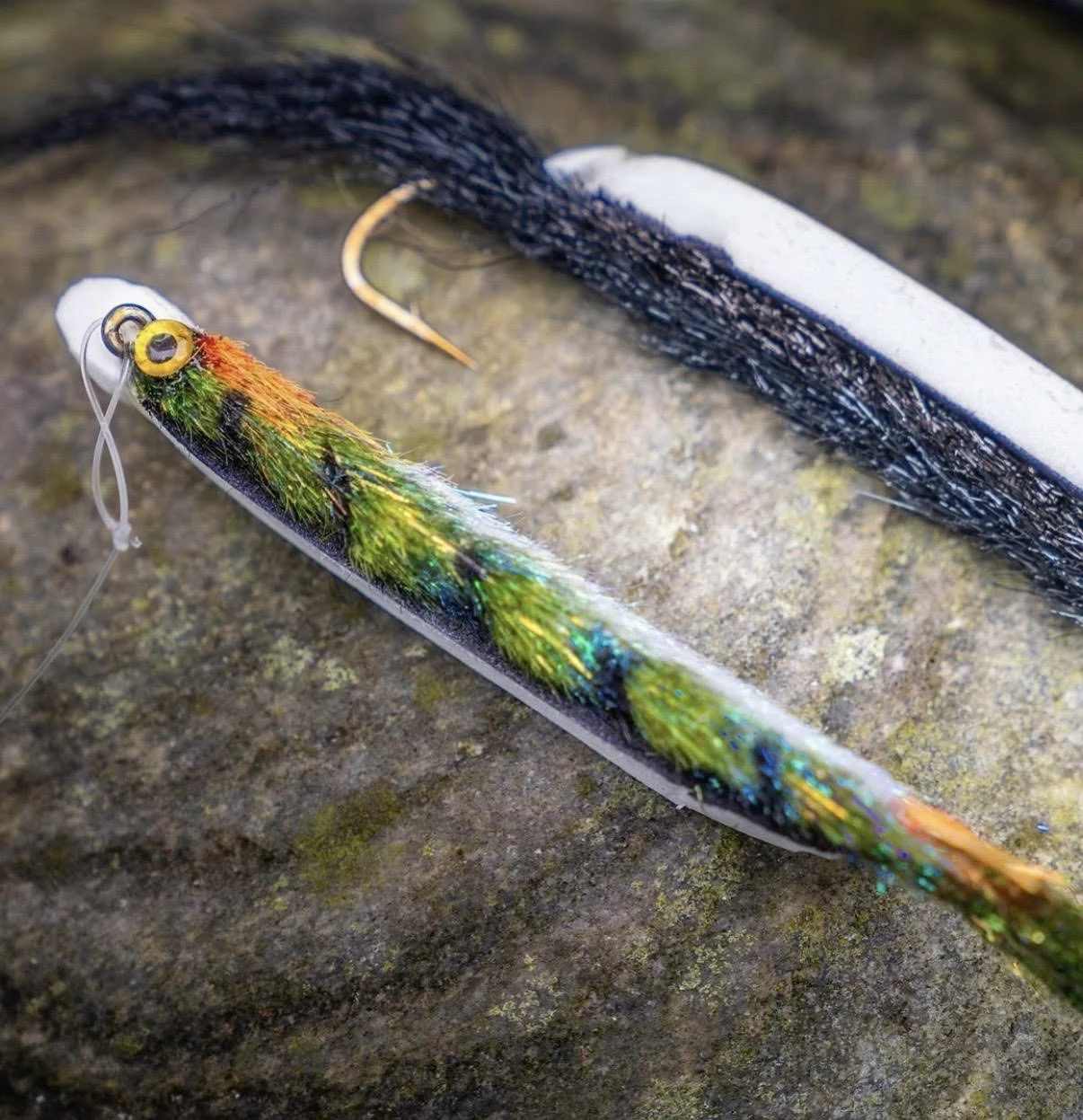
I’ve spent countless hours staring at an empty hook, thinking through problems. How do I tie chest fins on a minnow pattern so they stay extended and don’t collapse against the body under current pressure? How do I prevent a certain model from tangling during the retrieve? Those small technical details matter.
I use muddler heads frequently because they give the correct shape to a baitfish’s back and head. They also create pressure waves, bubbles, and subtle wakes that add life to the fly. With UV-cured heads, I can build realistic profiles and achieve a more jig-like swimming action when fishing downstream.
Movement always comes first. Realism is important, but sometimes an exaggerated fly outperforms a natural one. I fish patterns ranging from 3 cm up to 35 cm, depending on the situation. It’s essential to understand when a fly must hold its structure and when a softer, more sensitive swimming action is required.
Durability is important, but never at the expense of movement or profile. On the river, I observe the conditions, light, fishing pressure, water color, then test, sometimes fail, and adjust the pattern or size again. Over time, this process teaches you which fly works at the right moment.
Ultimately, it comes down to understanding how fish react in different situations and translating that understanding into the fly itself.Streamer fishing demands full commitment. There is no halfway approach, especially if you want to survive the difficult days that inevitably come with this style of fishing.
Streamer fishing demands confidence and commitment. What do you appreciate most about that style of fishing, and how has it shaped your approach on the water?
Streamer fishing demands full commitment. There is no halfway approach, especially if you want to survive the difficult days that inevitably come with this style of fishing. I don’t wait for obvious feeding windows or visible activity. I fish actively outside traditional prime times. Morning, midday, evening, night, I see opportunity in every moment. Streamer fishing has taught me to fish aggressively, but strategically. In many ways, it reshaped my entire approach to the river. I move more. I fish water that others might consider unlikely. I constantly observe the surface, analyze current flow, and even pay attention to how my own wading changes it. I’m aware of my shadow, my noise, and how fish position themselves at different times of the day.
It requires continuous reading of the current, constant adjustments in fly choice and casting angles, and the courage to fish differently than others around you. Understanding shadow lines. Being effective in low light. And casting accuracy cannot be overstated — precision is critical. I don’t cast only to obvious feeding lanes. I cast to potential ambush points. That forces you to understand predatory behavior, not just feeding behavior.
Some have said I’ve specialized too much. I disagree. Years ago, I intentionally narrowed my techniques so I could refine details, both in my flies and in my fishing. I’ve always believed that if you want to become truly good at something, you commit fully instead of doing a little bit of everything.
When I cast a streamer today, I carry a constant sense of confidence, a feeling that the next cast could produce. That confidence comes only from repetition and experience.
What I value most in streamer fishing is its versatility, and the mindset it demands. It requires confidence, even boldness. And sooner or later, it will reveal whether you truly have it.
Looking ahead, what’s next for you — whether that’s new water, new patterns, bigger fish, or a different direction entirely?
Looking ahead, I want to continue growing, both as a fly angler and as a fly tyer. Growth is part of the journey.
I want to understand fish behavior even more deeply in a changing climate. Waters are warming. Some are becoming more humic and darker. Flows are shifting. Insect life is changing. Seasonal timing is no longer what it once was. Everything is evolving.
Fish adapt, and as anglers, we must adapt as well. That also means responsibility. The more you understand fish, their behavior, and their environment, the harder it becomes to ignore the need for conservation. I will continue chasing beautiful wild trout, but I want to do so with respect for the rivers that make it possible.
I also plan to keep developing new fly patterns and experimenting with emerging materials. I want to push streamer fishing forward, refining small details that most people overlook, and constantly questioning what is considered “standard.” The goal isn’t to arrive somewhere. It’s continuous evolution, as fly designer, as an angler, and as a student of the river. And as long as there are rivers to read and trout that challenge me, I won’t slow down.
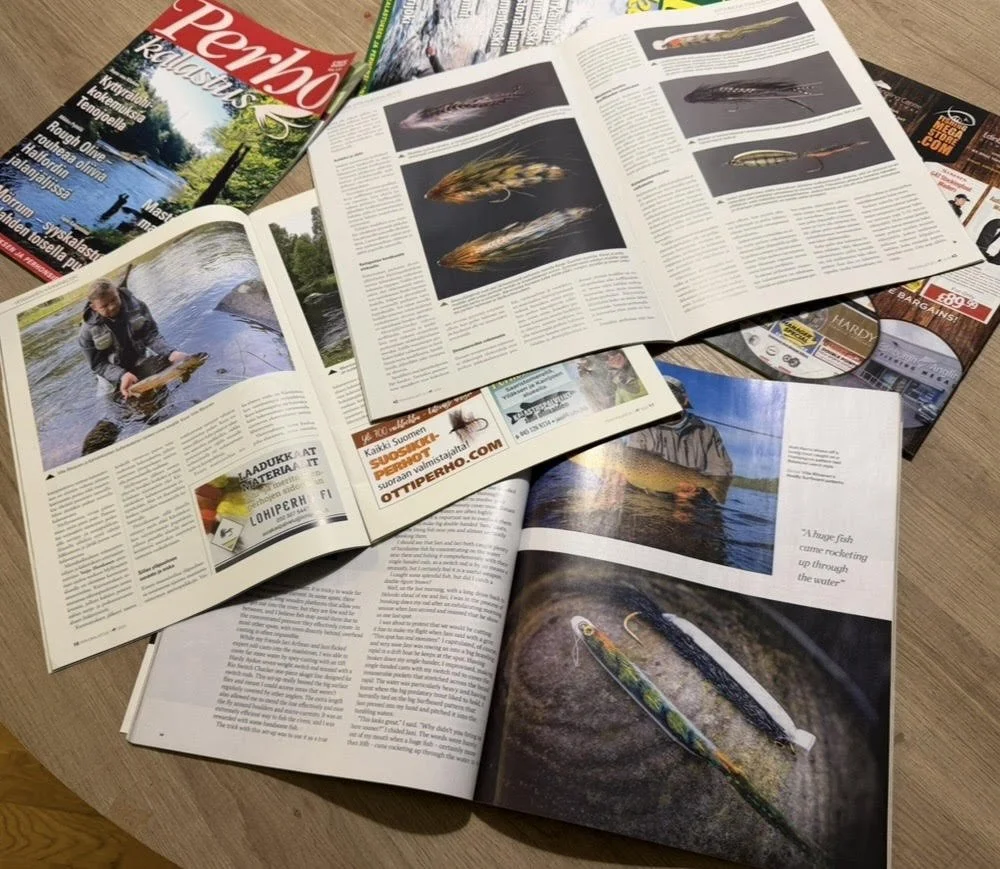
Fly fishing culture has always been shaped by anglers willing to question accepted ideas and refine details others overlook. Villeritvanen represents that mindset — someone committed not only to catching fish, but to understanding the deeper mechanics of how and why fish respond to certain presentations. His work reminds us that progress in fly fishing rarely comes from shortcuts. It comes from observation, experimentation, and time spent learning directly from the river.
As fisheries change and environmental pressures increase, thoughtful anglers become increasingly important voices in the future of the sport. Designers and anglers who pay attention to detail — from hydrodynamics in fly design to behavioral changes in trout — help push fly fishing forward in meaningful ways.
Fly Life Media exists to highlight anglers who contribute to the culture through substance, not noise. Villeritvanen’s commitment to purposeful design and disciplined streamer fishing reflects exactly that. His work is worth following for anglers who believe mastery is never finished — only refined.
